
On a humid morning off Singapore, an engine room team—accustomed to routine—found themselves staring at scorched cylinder liners, the byproduct of an invisible enemy: abrasive cat fines in a new VLSFO bunker. This isn’t a rare mishap. Around the globe, a tide of unpredictable fuel blends, evolving regulations like IMO 2020, and aftershocks of geopolitical turmoil (think Ukraine war) are converging on ship engines. And as anyone with skin in the game knows, a single fuel misstep can mean weeks out of commission, losses running into millions, and a hard lesson in the price of adaptation.
From Bunkers to Breakdowns: How VLSFO Set Sail for Trouble
The global maritime industry is facing a new era of maritime fuel quality challenges following the International Maritime Organization’s (IMO) 2020 sulfur cap. This regulation, which limits marine fuel sulfur content to 0.5% mass by mass, triggered a rapid shift to Very Low Sulfur Fuel Oil (VLSFO). While the move aimed to reduce emissions, it also introduced a wave of operational uncertainty, as VLSFO is not a single product but a blend of hydrodesulfurized atmospheric residues (AR), catalytic cracker heavy cycle oil (HCO), and hydrotreated vacuum gas oil (HVGO). The result: fuel properties now vary sharply between ports and suppliers, making quality assurance more complex than ever.
The Sulfur Cap’s Domino Effect
Before 2020, most ships ran on high-sulfur fuel oil. The sulfur cap forced refineries to innovate, blending different streams to create compliant VLSFO. However, these blends are far from uniform. For example, VLSFO properties—such as viscosity, density, and impurity levels—can differ significantly between major bunkering hubs like Singapore, European ports, and Asian regions with heavy use of Fluid Catalytic Cracking (FCC) processes. This variability has made it harder for ship operators to predict how a given batch of fuel will perform in their engines.
Cat Fines: The Hidden Threat in Marine Fuel
One of the most pressing risks with VLSFO is the increased presence of cat fines in marine fuel. Cat fines are microscopic alumina-silica particles left over from refinery catalytic cracking. Even with advanced separation, these abrasive particles often remain in the fuel, regulated under ISO 8217 regulations for marine fuel to a maximum of 60 mg/kg. Yet, field data shows that batches—especially from Asian FCC-heavy ports—can exceed this threshold, putting engines at risk.
Chief Engineer Lars Pedersen: "We had all the certificates in order, but a single VLSFO bunker with high cat fines took our vessel off-hire for nearly a month."
His experience is not unique. Despite meeting paperwork requirements, some VLSFO deliveries have led to accelerated wear in fuel injection systems, piston rings, and cylinder liners. The damage is often only discovered after costly repairs or even catastrophic engine failure.
Geopolitical Effects on Marine Fuel Supply
The situation has been worsened by recent geopolitical disruptions, such as the Ukraine war. These events have upended traditional supply chains, forcing refineries to source crude from new regions and adopt different blending strategies. This has led to even greater unpredictability in marine fuel quality, with impurity spikes and unstable fuel properties becoming more common.
- ISO 8217 cat fine limit: 60 mg/kg
- Operator internal limits: 30-40 mg/kg
- Key blending regions: Singapore, Europe, Asian FCC ports
As a result, ship operators are tightening their own standards, often setting stricter internal limits and demanding more rigorous testing. Yet, as the industry adapts, the challenge remains: ensuring reliable engine performance in a world where every bunker could bring a new surprise.
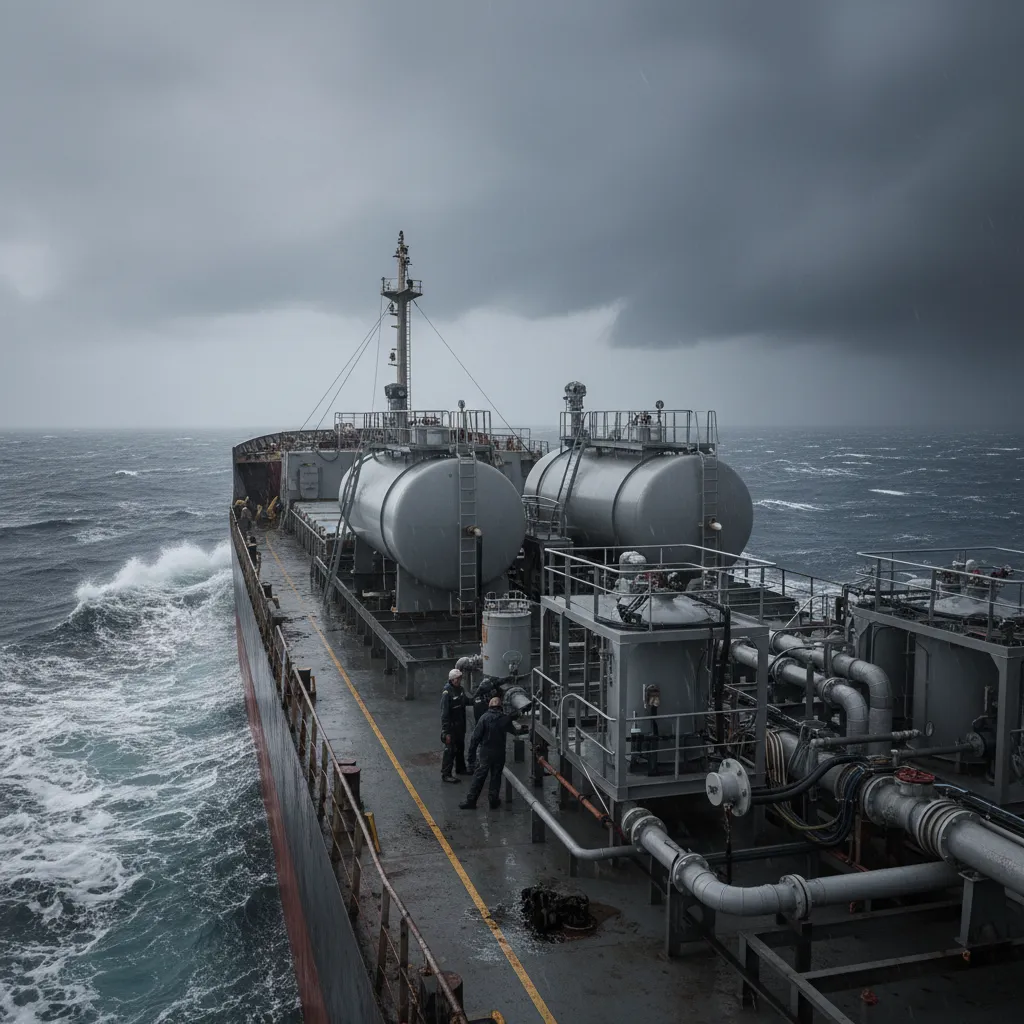
Inside the Invisible Threat: Cat Fines and the Cost of Contamination
Cat fines in marine fuel are a silent but severe risk for the global shipping industry. These microscopic alumina-silica particles, originating from refinery Fluid Catalytic Cracking (FCC) units, are not just harmless specs—they are abrasive, engine-killing contaminants that can quietly pass through basic onboard filtration systems. As the industry shifts to Very Low Sulfur Fuel Oil (VLSFO) following the IMO 2020 sulfur cap, the challenge of marine fuel contamination limits has grown, with cat fines emerging as a leading cause of engine reliability issues with VLSFO.
How Cat Fines Survive from Refinery to Fuel Tank
Refineries use advanced separation processes, but cat fines—often harder than steel—can survive these steps. Even after blending and purification, residual cat fines remain in the final fuel, regulated by ISO 8217 to a maximum of 60 mg/kg (combined aluminum and silicon). However, real-world data show that cat fine levels can exceed this limit, especially in Asian bunkering hubs like Singapore. Once onboard, if not properly managed, these particles can bypass standard purification and filtration, making their way into sensitive engine components.
Damage Log: The Cost of Cat Fine Contamination
The impact of cat fines on marine engines is both immediate and costly. When these particles enter the fuel injection system, they cause rapid abrasive wear to injectors, piston rings, and cylinder liners. The result is increased fuel consumption, reduced engine efficiency, and, in severe cases, catastrophic engine failure. Technical Director Elena Mendez summarizes the problem:
"You don’t see cat fines—but you do see their signature when your engine is stripped for overhaul."
One major container vessel recently suffered weeks of downtime and repairs after bunkering VLSFO with cat fine content above ISO limits. The cost of such incidents can run into hundreds of thousands of dollars, not including lost charter revenue and reputational damage.
Regional Variability: Where Are Cat Fines Most Common?
Post-2020, incidents of cat fines above 60 mg/kg have become more frequent, particularly in Asian markets. The table below illustrates the distribution of cat fine levels by region, highlighting the need for stronger filtration and real-time monitoring to protect engine reliability.
| Region | Average Cat Fine Level (mg/kg) | Incidents Above ISO 8217 Limit (%) |
|---|---|---|
| Singapore/Asia | 45–70 | 15% |
| Europe | 30–50 | 5% |
| Americas | 25–40 | 2% |
Best Practices for Managing Cat Fines in Marine Fuel
- Implement rigorous supplier vetting and fuel testing to ensure compliance with marine fuel contamination limits.
- Adopt advanced onboard filtration and purification systems, including high-efficiency filters and real-time monitoring technologies.
- Set conservative internal cat fine limits (30–40 mg/kg) and include these in charter party agreements.
- Regularly maintain and monitor purification equipment, using differential pressure readings as early warning signals.
Cat fines are an invisible but persistent threat in today’s VLSFO landscape. Without robust management, they undermine engine reliability and drive up operational costs, making proactive fuel quality control essential for every vessel operator.

Defense in Depth: Fuel Quality Control Strategies and Tech Upgrades
Procurement Playbook: Raising the Bar for Marine Fuel Quality Control
The first line of defense in marine fuel quality control starts long before bunkering. Leading ship operators are tightening their procurement playbooks, rigorously vetting suppliers for routine compliance with ISO 8217 and MARPOL Annex VI. Contracts now often demand explicit contaminant limits—especially for catalytic fines—and require suppliers to maintain robust quality control systems. Standardized, MARPOL-compliant sampling procedures at the point of delivery are non-negotiable, ensuring that fuel samples reflect true onboard conditions.
Testing: ICP-AES for Assurance, But the Clock Ticks
Post-bunkering, independent laboratory testing remains a cornerstone of marine fuel procurement best practices. Inductively Coupled Plasma – Atomic Emission Spectrometry (ICP-AES) delivers precise, laboratory-grade quantification of aluminum and silicon—critical markers for cat fines. However, these results often arrive only after the vessel has departed, limiting their value for immediate operational decisions. This lag highlights the need for faster, more responsive fuel quality control solutions.
Now & Next: Real-Time Fuel Analysis Technologies at Sea
Modern vessels are rapidly adopting real-time fuel analysis technologies to bridge the gap. Low-field nuclear magnetic resonance (NMR) sensors are emerging as the gold standard, providing continuous, in-line measurement of cat fine concentrations with laboratory-comparable accuracy—down to parts per million. As Head of Fleet Operations Fiona Zhao notes:
"We've invested in NMR fuel analyzers—not just for compliance, but for peace of mind between ports."
These sensors, along with optical particle counters and advanced density/viscosity meters, are now integrated into vessel control systems. This allows for dynamic, data-driven risk management, enabling crews to react to fuel quality issues in real time rather than after the fact.
Advanced Filtration Systems: The New Arms Race in Marine Diesel Protection
Onboard, a multi-layered approach to fuel purification is essential. Modern ships deploy a combination of:
- Centrifugal purifiers for bulk contaminant removal
- High-efficiency filters downstream of purification units
- Optical particle counters for continuous monitoring
Differential pressure sensors across filter elements provide early warnings of excessive contaminant loading, prompting timely maintenance. Many operators now enforce stricter internal cat fine limits—often 30-40 mg/kg—well below ISO thresholds, and include these requirements in charter party agreements.
Data Integration and the Blockchain Wildcard
The integration of real-time fuel analysis data into vessel management systems is transforming marine diesel operations. Predictive analytics can now flag trends before they become critical, shifting maintenance from reactive to proactive. Looking ahead, blockchain-based fuel traceability promises a tamper-proof digital logbook, offering end-to-end transparency from refinery to engine room.
Layered strategies—from supplier audits to in-line analysis—are redefining fuel quality control. As technology advances, the industry’s ability to protect engines and ensure operational efficiency continues to grow stronger.

Live from the Engine Room: Best Practices Meet Real-World Headwinds
The daily grind in a ship’s engine room has never been more critical, as fuel management strategies directly impact engine reliability issues with VLSFO. With the rise of cat fines and unpredictable fuel quality, systematic onboard routines are now the frontline defense against costly breakdowns and downtime.
Daily Rituals: The Essentials of Fuel Purification Techniques
Every day, marine engineers follow a strict routine to protect engines from abrasive cat fines. This includes:
- Settling Tank TLC: Careful management of settling tanks, with precise temperature control, allows heavier contaminants to separate before fuel moves downstream.
- Filter Changes: Regular replacement of high-efficiency filters after purification units is non-negotiable. As Marine Superintendent Amir Patel puts it:
"The only day you should skip filter maintenance is the day you want to call a tugboat."
- Centrifugal Purifier Maintenance: Routine cleaning and servicing of centrifugal purifiers, often arranged in cascade, ensure maximum removal of cat fines.
Skipping any step can spell disaster, as even a brief lapse may allow cat fines to reach sensitive engine parts, leading to rapid wear and potential engine failure.
Operator Moves: Stricter Internal Cat Fine Thresholds
Many operators now enforce internal cat fine limits of 30-40 mg/kg—stricter than the ISO 8217 standard. These thresholds are increasingly written into charter party agreements, making them a contractual obligation. This proactive approach to marine fuel procurement best practices reflects a growing recognition that regulatory compliance alone is not enough to safeguard engine reliability.
Early-Warning Systems: Monitoring for Trouble
Modern vessels are equipped with differential pressure sensors across filter elements. These early-warning systems alert crews to rising contaminant loads, prompting timely filter changes before catastrophic failures occur. Combined with real-time onboard analysis—using technologies like low-field NMR and optical particle counters—crews can respond immediately to spikes in cat fine content, further reducing risk.
Chart: Impact of Fuel Management Strategies on Engine Failures
| Strategy | Engine Failure Rate (per 100 vessels/year) | Reported Reduction (%) |
|---|---|---|
| Standard ISO 8217 Compliance | 8.2 | — |
| Stricter Internal Cat Fine Limits (30-40 mg/kg) | 3.9 | 52% |
| Advanced Onboard Monitoring & Cascading Purification | 2.1 | 74% |
Source: Operator reports, 2023-2025
Documentation and Charter Requirements
Charters and contracts now often require proof of robust fuel management strategies, including logs of settling tank care, purifier maintenance, and filter changes. This documentation is not just best practice—it’s becoming industry standard as shipowners and charterers seek to minimize risk and ensure operational continuity.
Proactive fuel quality management, combining advanced detection, strict purification routines, and contractual safeguards, is proving essential in reducing engine reliability issues with VLSFO and minimizing the impact of cat fines.
Chasing the Next Wave: Alternative Fuels, Predictive Analytics, and a Marathon of Change
As the maritime industry steers into a new era, the next wave of challenges and opportunities is defined by the rise of alternative marine fuels, the adoption of predictive analytics in fuel quality, and the relentless pace of regulatory change. The shift from traditional VLSFO to fuels like LNG, methanol, and ammonia is not just about cleaner air—it’s about navigating a complex landscape of new contaminants, operational quirks, and compatibility puzzles. Each fuel brings its own risks: LNG can introduce methane slip and cryogenic handling issues, methanol and ammonia require new storage and safety protocols, and all demand rigorous quality monitoring to prevent engine damage.
This transition is being driven by tightening maritime decarbonization regulations 2025 and beyond. The International Maritime Organization (IMO), ISO, and the upcoming FuelEU Maritime requirements are pushing operators toward fuel diversification and lower emissions. But compliance is a moving target. As standards evolve and new contaminants emerge in biofuel blends and synthetic fuels, the industry must remain agile. “Maritime fuel is entering an era where adaptability, not tradition, ensures survival,” says futurist and shipping analyst Leo Matsuda.
In this marathon of change, data is the new lifeblood. Predictive analytics and machine learning are quickly becoming essential tools for future-proofing fleets. By harnessing real-time data from onboard sensors and laboratory analysis, operators can anticipate fuel quality issues before they escalate. Algorithms trained on global fuel quality trends can flag suspect bunkers, optimize purification settings, and even forecast the impact of new blends. This is not just adaptation—it’s anticipation, transforming fuel management from a reactive process into a proactive science.
The analogy is clear: navigating marine fuel quality is more like chess than roulette. Success depends on thinking several moves ahead, not just reacting to the latest crisis. As LNG, methanol, and ammonia gain market share—forecast to rise steadily through 2025 and beyond—shipowners must invest in both technology and people. Continuous crew training, regular updates to internal standards, and close collaboration with suppliers are now essential. The rise of blockchain-based supply chain transparency and advanced analytics platforms further supports this shift, offering new ways to ensure compliance and traceability.
Looking ahead, the industry’s resilience will depend on its ability to blend robust procurement and purification practices with cutting-edge digital solutions. The next generation of marine fuel challenges will not be solved by tradition alone. Instead, success will come to those who embrace change, invest in data-driven strategies, and prioritize ongoing learning. As the regulatory landscape evolves and alternative fuels become mainstream, the only constant is the need for agility. In the words of Leo Matsuda, “Maritime fuel is entering an era where adaptability, not tradition, ensures survival.” The race is on—and it’s a marathon, not a sprint.
TL;DR: The maritime sector is navigating a maze of new fuel requirements, impurity threats, and supply volatility. Smart, tech-savvy, and prevention-driven strategies—ranging from advanced filtration to predictive analytics—are indispensable to surviving this new era of shipping.
Comments
Post a Comment