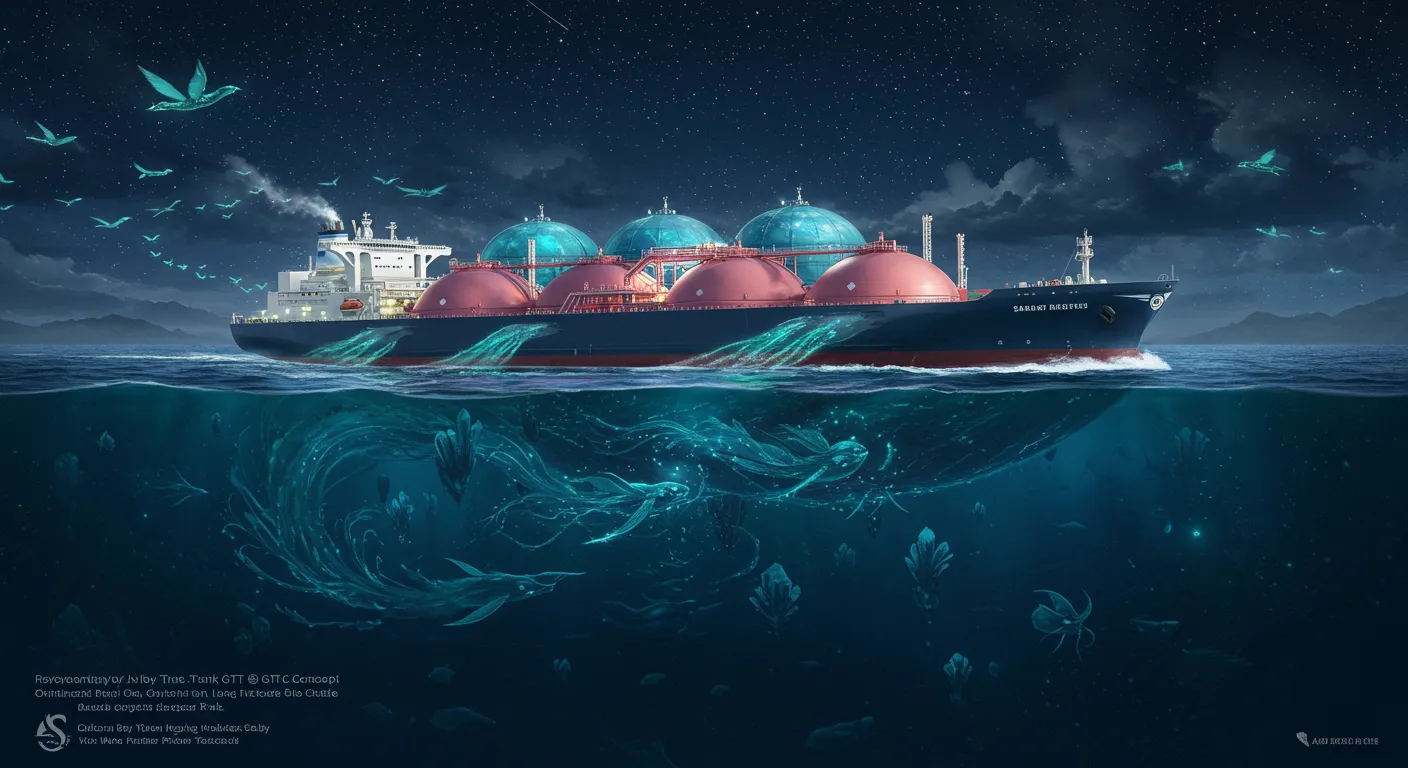
Let me take you back to Milan, at Gastech2025, where the air was dense with the buzz of breakthroughs. Imagine me huddled over espresso with a table of engineers, animatedly sketching hulls and tanks on napkins. That’s where I first heard about the revolution brewing at Samsung Heavy Industries: a three-tank LNG carrier concept, shattering decades of convention. This isn’t just industry gossip—this is a seismic shift. Here’s the story that unspooled from there, blending innovation, grit, and a hefty dash of fresh thinking.
Three’s a Crowd? Why Samsung Heavy Industries Ditched the Fourth Tank
The global push for greener shipping has forced everyone in the LNG carrier business to rethink what’s possible. For decades, the four-tank layout was the gold standard for LNG carriers—tried, tested, and trusted. But as environmental regulations tighten and efficiency becomes king, Samsung Heavy Industries (SHI) and GTT decided to ask a bold question: what if three tanks could do the job better than four?
Tradition Meets Innovation: Rethinking LNG Carrier Design
Traditionally, LNG carriers in the 140,000–180,000 m³ range have relied on four tanks to balance cargo, stability, and construction. This approach made sense for decades, but the industry’s move toward decarbonization—driven by International Maritime Organization (IMO) targets and the need for lower emissions—demanded a fresh look. The Samsung Heavy Industries LNG carriers team, working closely with GTT, began to crunch the numbers and challenge every assumption.
‘This is about rewriting the rulebook, so every decision was questioned twice over.’ – Engineer at GTT
At the Gastech2025 roundtable, a GTT engineer made the point clear by tearing a sheet of paper into three parts—symbolizing the shift from four tanks to three. It wasn’t just a dramatic gesture; it was a signal that the industry was ready to break from tradition in favor of smarter, more efficient LNG carrier design.
Why Three Tanks? The Technical and Economic Rationale
The new three-tank GTT concept is more than just a numbers game. By consolidating cargo into three larger tanks, SHI’s design achieves several key benefits:
Higher cargo capacity: The new design supports up to 174,000 m³—matching or exceeding many four-tank vessels.
Simpler construction: Fewer tanks mean fewer blocks to assemble, which speeds up shipyard work and improves quality control.
Lighter, more efficient ships: With a streamlined midbody, the hull experiences less wave resistance, boosting hydrodynamic efficiency and reducing fuel use.
Streamlined systems: Fewer tanks translate to less piping, fewer pumps, and easier maintenance—cutting both costs and complexity over the vessel’s life.
Of course, larger tanks bring new challenges. SHI and GTT have invested in advanced sloshing mitigation, reinforced membranes, and real-time monitoring to ensure safety and reliability. The payoff? A vessel that’s lighter, carries more cargo, and is easier to operate and maintain.
Market Impact: Oceania Orders and Industry Momentum
The market has already responded. In a major win for the new design, Samsung Heavy Industries secured orders for six LNG carriers from two Oceania shipowners. These vessels—each featuring the three-tank GTT concept—are set for delivery by November 2028. This order is a significant part of SHI’s 2025 order target of $9.8 billion, with 49% already secured as of the latest contracts.
Design | Tank Count | Capacity (m³) | Order Details |
|---|---|---|---|
Traditional LNG Carrier | 4 | 140,000–180,000 | — |
SHI Three-Tank GTT | 3 | 174,000 | 6 ships for Oceania (delivery by Nov 2028) |
This shift isn’t just about numbers—it’s about setting a new standard. The three-tank approach is already influencing LNG carrier orders for 2025 and shaping the next wave of LNG carrier delivery in 2028. With higher capacity, easier maintenance, and a lighter environmental footprint, SHI’s three-tank LNG carriers are leading the way into a new era of sustainable shipping.
Membranes of the Future: The GTT Mark III Flex Magic
When I first encountered the GTT Mark III membrane technology, it was clear why it’s now the gold standard for LNG containment. The Mark III Flex membrane is not just an incremental upgrade—it’s a leap forward in safety, efficiency, and adaptability. Let’s break down why this system is the star of Samsung Heavy Industries’ next-gen LNG carriers and why it’s making waves in projects like the FLNG Mozambique project.
Why the GTT Mark III Flex Membrane Is the Star of the Show
Thinner, tougher, smarter: The Mark III Flex uses a 1.2 mm corrugated stainless steel primary barrier. This design is both incredibly thin and strong, allowing the membrane to flex with the ship’s movements and absorb sloshing forces.
Glass wool insulation: Sandwiched behind the steel, advanced glass wool insulation drastically cuts heat transfer. This means less LNG boil-off, which is a game changer for cargo losses and environmental impact.
Modular “lego set” design: The Mark III’s modularity is so effective that at Gastech2025, some joked it was like building with lego blocks—making construction and retrofitting far simpler and faster.
Science in Action: How Mark III Flex Works
The real magic is in the details. The 1.2 mm corrugated stainless steel gives the membrane both flexibility and strength. The corrugations act like tiny shock absorbers, helping the tank withstand the dynamic loads from moving LNG. Behind this, the glass wool insulation layer keeps the -163°C cargo cold, slashing heat ingress and, crucially, reducing the LNG boil-off rate (BOR) to just 0.08–0.10% per day. For operators, this means more delivered cargo and less lost to evaporation—a direct boost to both profits and sustainability.
‘Watching the Mark III in action is like seeing a pressure suit for a spaceship—impossibly thin, impossibly strong.’ – LNG ship systems architect
NO96 vs. Mark III: A Quick Side-by-Side
Feature | NO96 | Mark III Flex |
|---|---|---|
Primary Barrier | 0.7 mm Invar sheets | 1.2 mm corrugated stainless steel |
Insulation | Perlite or glass wool | Advanced glass wool |
Boil-Off Rate (BOR) | ~0.12%/day | 0.08–0.10%/day |
This leap in insulation and membrane technology is why the Mark III is being chosen for cutting-edge projects like the FLNG Mozambique project, where every drop of LNG counts and safety is paramount.
LNG Boil-Off Reduction Strategies: Beyond the Membrane
While the Mark III membrane system is at the core of LNG boil-off reduction, it’s part of a bigger toolkit. Modern carriers now integrate reliquefaction units—using nitrogen expansion or reverse Brayton cycles—to recondense vaporized LNG and return it to the tanks. Slosh-baffle wizardry, including anti-slosh baffles and real-time monitoring, keeps the cargo stable and the membrane safe, even in rough seas.
Real-World Impact: FLNG Mozambique and Beyond
The Mark III membrane’s performance isn’t just theoretical. In the FLNG Mozambique project, it’s proving its worth by delivering ultra-low BOR and robust safety in challenging offshore conditions. This technology is setting new benchmarks for LNG shipping, making it easier to comply with strict IMO regulations and future-proofing vessels for decades to come.
Numbers that Count: Fuel Efficiency and the Battle Against Boil-Off
When it comes to LNG carrier fuel efficiency, every decimal point matters. The industry’s shift from traditional steam turbines to advanced dual-fuel engines—like the MAN ME-GA system—has been a game changer. Let’s break down the numbers and innovations that are redefining LNG carrier decarbonization and operational costs, with a special focus on the battle against LNG boil-off reduction.
From Steam to MAN ME-GA: The Efficiency Revolution
Old-school LNG carriers relied on steam turbines, which managed a thermal efficiency of just 30–35%. With the introduction of two-stroke dual-fuel engines, especially the MAN ME-GA, efficiency has soared to 50–52%. This leap means more of the energy in LNG actually moves the ship, and less is wasted as heat. The ability to switch between LNG, marine diesel oil (MDO), and heavy fuel oil (HFO) also adds flexibility and resilience to operations.
‘If you can run leaner and cleaner, you don’t just save money—you lead the pack.’ – Ship operator, Gastech2025
The Real Test: Delivered LNG—Data Never Lies
Ultimately, the success of any LNG carrier design is measured by how much LNG reaches the customer. Older vessels, with higher boil-off rates (BOR), lost about 0.15% of cargo per day to vaporization. Thanks to advanced membrane technologies and insulation, today’s best-in-class ships—including SHI’s three-tank GTT concept—have slashed this to 0.08–0.10% per day. Over a 20-day voyage, that’s a difference of up to 1.4% more LNG delivered—a major win for both revenue and emissions.
Design | Boil-Off Rate (BOR) | Thermal Efficiency |
|---|---|---|
Old Steam Turbine | ~0.15%/day | 30–35% |
Modern Three-Tank (MAN ME-GA) | 0.08–0.10%/day | 50–52% |
Every Tweak Counts: Energy-Saving Devices (ESDs)
Modern LNG carriers are packed with ESDs that push efficiency even further:
Air lubrication systems reduce hull friction by creating a layer of bubbles beneath the ship.
Rotor sails harness wind power to cut fuel use.
Optimized propellers and waste heat recovery systems squeeze more work from every drop of fuel.
Advanced antifouling coatings keep hulls smooth, reducing drag and keeping fuel bills in check.
Each of these technologies nudges the efficiency meter upward, supporting compliance with IMO’s EEXI and CII rules and helping operators stay ahead in the LNG carrier decarbonization race.
Boil-Off Gas: Cost and Climate
Boil-off gas (BOG) is both a cost and climate issue. Less BOG means more LNG delivered and less methane slip—a potent greenhouse gas. The latest ships use reliquefaction units that recycle nearly all BOG, returning it to the tanks and virtually eliminating methane emissions. This not only maximizes cargo value but also keeps ships compliant with tightening emissions regulations.
OPEX Math: Fewer Tanks, Fewer Headaches
The three-tank design isn’t just about capacity. Fewer tanks mean fewer pumps, valves, and pipes—translating to lower LNG carrier operational costs and simpler maintenance. With less equipment to monitor and repair, and with digital twins and AI-driven systems optimizing every voyage, operators see real savings over the vessel’s lifespan.
In summary, the numbers tell a clear story: next-gen propulsion, clever ESDs, and smart tank design are pushing LNG carrier fuel efficiency to new heights, slashing boil-off, and setting a new standard for sustainable, cost-effective shipping.
The Digital Bridge: AI, Digital Twins, and Smarter Fleets
When I first heard an SHI engineer describe running a digital twin as “playing a video game, but for billions of dollars’ worth of ship,” I realized just how far LNG carrier digitalization has come. Today, digital twins are not science fiction—they’re standard equipment on Samsung Heavy Industries’ (SHI) next-generation LNG carriers with the three cargo tanks design. This digital bridge is transforming everything from fuel management to LNG carrier predictive maintenance, making these vessels smarter, safer, and ready for whatever the future brings.
Digital Twins: The Ship’s Virtual Double
Each new SHI LNG carrier is equipped with a digital twin—a real-time, virtual replica of the physical ship. Hundreds of digital sensors (measuring temperature, strain, gas detection, and more) feed data into this model. The digital twin tracks the vessel’s condition, simulates operations, and predicts how the ship will respond to different scenarios. It’s not just about monitoring; it’s about anticipating. If a tank membrane starts to show unusual strain or a pump’s vibration pattern changes, the digital twin flags it before it becomes a problem. This is LNG carrier maintenance simplification at its best—proactive, not reactive.
AI-Driven Energy Management: Smarter, Greener Voyages
AI-driven energy management systems are now the brains behind fuel efficiency. These systems analyze real-time data—weather, sea state, engine performance—and recommend route adjustments or speed changes to save fuel. For example, if a strong tailwind is detected, the AI might suggest reducing engine output, letting nature do some of the work. This not only cuts costs but also helps meet strict IMO emissions targets. As one SHI digital systems director put it:
‘If a ship can think almost as fast as its crew, that’s not futurism—that’s survival.’
With LNG carrier digitalization, the vessel becomes an active partner in its own operation, constantly learning and optimizing.
Predictive Maintenance: The Ship That Calls Home
Imagine your ship “calling home” before something goes wrong. That’s predictive maintenance in action. Machine learning algorithms sift through sensor data, spotting patterns that signal wear or impending failure—long before a human would notice. This means fewer unexpected breakdowns, lower repair costs, and more time at sea. It’s a game-changer for LNG carrier predictive maintenance, especially with the larger, more complex systems required by the three cargo tanks design.
Forward Bridge Design: Visibility and Control
The forward bridge design isn’t just about aesthetics. Pilots and officers report better visibility and more intuitive control layouts, making navigation safer and easier—especially in busy ports or tight channels. The bridge also acts as a digital command center, integrating all the ship’s smart systems for seamless operation.
Decks Ready for Tomorrow’s Tech
SHI’s modular approach means decks are prepped for future upgrades. Whether it’s fitting ammonia or hydrogen fuel systems, adding batteries, or integrating new AI modules, the infrastructure is already in place. This future-proofing is essential as regulations evolve and zero-carbon fuels become the norm.
Digitalization: The Heart of Smarter Fleets
All these innovations—digital twins, AI-driven energy management, predictive maintenance, and modular design—work together to create a new standard for LNG carrier digitalization. The result? Smarter fleets that deliver long-term value, adapt to new fuels, and simplify LNG carrier maintenance. In the words of SHI’s digital team, these ships are “thinking almost as fast as their crews”—and that’s the real digital bridge to the future.
Cost, Compliance, and the Green Math of Investment
When we talk about next-generation LNG carriers, especially Samsung Heavy Industries’ (SHI) three-tank GTT design, the conversation quickly shifts from technical marvels to the hard numbers: LNG carrier operational costs, environmental compliance, and the true value of future-proofing. Let’s break down why the upfront investment in these vessels might sting, but how the savings and strategic advantages elegantly stack up over a 25–30 year design life.
Upfront CAPEX vs. Lifetime OPEX: The Numbers Game
It’s no secret: a new LNG carrier with advanced GTT membrane tanks, digital twins, and energy-saving devices costs more to build. The CAPEX is higher—think of it as paying for tomorrow’s peace of mind today. But here’s where the green math comes in. Over the vessel’s lifetime, OPEX drops thanks to:
Lower fuel consumption (up to 20% savings with new propulsion and hull designs)
Reduced maintenance, thanks to predictive analytics and digital monitoring
Minimized boil-off rates and reliquefaction units, maximizing delivered cargo
Avoided carbon taxes and penalties due to top-tier CII ratings
As one maritime economist put it:
‘You buy a better ship, you avoid tomorrow’s fines—and that’s worth more than you can calculate in a spreadsheet.’
Holding the Line on CII: Compliance as an Asset
Regulatory compliance isn’t just a box to tick—it’s a driver of asset value. The Carbon Intensity Indicator (CII) and Energy Efficiency Existing Ship Index (EEXI) are now central to vessel design. SHI’s three-tank LNG carriers are engineered to achieve A or B CII ratings, which means:
Lower annual carbon taxes
Higher resale value in a tightening regulatory market
Reduced risk of forced slow-steaming or early scrapping
With the IMO’s 2050 targets looming, and the real possibility of CII rules tightening by 2035, owners of these next-gen ships are positioned to come out on top. Imagine the scenario: older ships drop to C or D ratings, facing higher costs and lower charter rates, while your vessel holds its value and operational flexibility.
Crunching the Emissions: LCA and WTW Methodologies
Modern investment decisions go beyond simple fuel savings. Life Cycle Assessment (LCA) and Well-to-Wake (WTW) methodologies now crunch all emissions—direct (Tank-to-Wake, TTW) and upstream. SHI’s design minimizes methane slip, leverages reliquefaction, and is built for future fuels like ammonia and hydrogen. This holistic approach ensures compliance not just today, but as regulations evolve.
Regulatory Partnerships: No Rogue Ships Here
SHI works hand-in-hand with DNV, Lloyd’s Register, and American Bureau of Shipping (ABS) to ensure every vessel meets the IGC Code and all global standards. This partnership streamlines approvals and guarantees that when LNG carrier orders 2025 are placed, and LNG carrier delivery 2028 arrives, there are no surprises—just ships ready for global trade.
Asset Value in a Changing World
Here’s the hypothetical: If CII rules tighten in 2035, who wins? The answer is clear—owners who invested in future-proofed, compliant ships. With SHI’s 2025 order target already at 49% ($9.8B) after the latest contracts, it’s obvious the industry sees the writing on the wall. The green math of investment is reshaping the LNG carrier market—one compliant, efficient, and valuable ship at a time.
Wild Card: The ‘What Ifs’ and Futureproof Fantasies of Ship Design
When I look at Samsung Heavy Industries’ three cargo tanks design for next-generation LNG carriers, I see more than just a technical leap—I see a blueprint for the future. The move from four tanks to three isn’t just about efficiency today; it’s about unlocking possibilities for tomorrow’s fuels, digital systems, and even entirely new ways to build and use ships. Let’s dive into the wild cards and futureproof dreams this design brings to the table.
Retrofitting for Tomorrow: Ammonia, Hydrogen, and Beyond
Imagine it’s 2045. The world’s energy mix has shifted, and ammonia is the new standard for zero-carbon shipping. If you own a traditional LNG carrier, the thought of converting it to run on ammonia might seem overwhelming. But with SHI’s three-tank GTT concept, ammonia- and hydrogen-readiness is built in from day one. The tanks, piping, and digital controls are designed for modular upgrades. You don’t have to rip out the heart of your ship—just swap in new fuel supply systems and engines. This is the essence of futureproofing: anticipating the unknown and making it manageable.
Digital Upgrades: Staying State-of-the-Art
Another game-changer is digitalization. The three-tank LNG carrier modular construction isn’t just physical—it’s digital, too. From the start, these ships are equipped with AI-driven energy management, digital twins, and sensor networks. Need to upgrade your methane leak detection or optimize voyage planning with the latest AI? Just swap out a sensor or software module. Your vessel stays at the cutting edge, without the need for a full retrofit. As a senior project manager at SHI put it:
‘If you’re buying an LNG carrier in 2025, you’re really preordering a platform for the next 30 years.’
Shipyard Modularity: Faster Builds, Safer Teams
From a shipyard perspective, the three-tank model is a revolution in modular construction. By reducing tank blocks from four to three, SHI has made builds faster and safer. Fewer blocks mean fewer crane lifts, less welding, and a lower risk of errors or mishaps. This modular approach also means higher quality control and a safer workforce—key advantages as shipyards race to meet global demand for LNG carrier decarbonization.
Three-tank design: Reduces construction tank blocks from 4 to 3
Modular builds: Shorter construction time, fewer errors, improved safety
Floating LNG Tank Design: Off-Grid Energy Fantasies
Here’s where the imagination really takes off. The same floating LNG tank design that powers ocean giants could one day democratize energy delivery. Think rapid-deployment, off-grid floating LNG units serving remote communities or disaster zones. With modular three-tank blocks, these units could be built quickly, shipped anywhere, and even repurposed as energy needs evolve. It’s a vision that stretches beyond shipping and into the heart of global energy access.
Voices from the Industry: Adapting and Evolving
At Gastech2025, one sentiment stood out: ‘Our toolbox grows every year—nobody’s out of a job, the jobs just change.’ This captures the spirit of the three-tank concept. It’s not just about technology; it’s about adaptability. As digital systems, fuels, and regulations evolve, so do the skills and roles of the people who build, operate, and maintain these vessels.
In the end, the three-tank LNG carrier is more than a ship—it’s a flexible, modular platform built for a future we can only begin to imagine. The design isn’t just about now—it’s about what shipping and energy will need two decades from today.
Conclusion: Why Three-Tank LNG Carriers Might Just Change Everything
Reflecting on the atmosphere at Gastech2025, I sensed a unique blend of optimism and skepticism in the air. There was excitement about the future of shipping, but also a clear-eyed recognition that the industry faces enormous challenges. As I walked the exhibition floor, the buzz around Samsung Heavy Industries LNG carriers and the three-tank GTT concept was unmistakable. People were asking: Is this just another incremental step, or could it truly redefine LNG carrier fuel efficiency and sustainability for decades to come?
After diving deep into the technical and regulatory details, I am convinced that SHI’s new design is more than a clever tweak. It’s a timely innovation, arriving just as the maritime world is being reshaped by stricter IMO regulations, shifting market demands, and the urgent need to address climate change. The three-tank GTT concept doesn’t just improve on what came before—it fundamentally reimagines how LNG carriers are built, operated, and adapted for the future.
The heart of this transformation lies in the way the three-tank design brings together efficiency, safety, and adaptability. By moving away from the traditional four-tank layout, Samsung Heavy Industries has unlocked new potential for hydrodynamic performance, reduced boil-off rates, and streamlined construction. The result is a vessel that can carry more LNG with less environmental impact, while also being easier to maintain and upgrade. This is not just about meeting today’s Energy Efficiency Existing Ship Index (EEXI) and Carbon Intensity Indicator (CII) requirements—it’s about setting a new standard for what LNG carriers can achieve.
What struck me most at Gastech2025 was the spirit of collaboration driving this progress. It’s not just Samsung and GTT working in isolation. Shipyards, technology providers, classification societies, and regulators are all coming together to ensure that these next-generation LNG carriers are safe, efficient, and ready for the future. This kind of cross-industry teamwork is essential if we are to meet the IMO’s ambitious 2050 decarbonization targets and keep global shipping on a sustainable path.
The three-tank GTT concept is more than a design update—it’s a systems overhaul. From advanced membrane technologies and digital twins to AI-driven energy management and future-proofing for ammonia or hydrogen fuels, every aspect of these vessels is built with the next 30 years in mind. As the VP of Samsung Heavy Industries put it at the conference,
‘We’re not just building ships—we’re setting the compass for a greener, more resilient industry.’
Looking ahead, the implications are profound. If the three-tank design proves itself at sea, we could see a rapid shift across the LNG carrier fleet. Imagine a world where zero-emissions LNG carriers are the norm, not the exception—where digital systems optimize every voyage, and vessels are routinely upgraded to run on the cleanest fuels available. This isn’t science fiction; it’s the blueprint SHI is putting forward today.
In summary, the next generation of Samsung Heavy Industries LNG carriers, powered by the three-tank GTT concept, could define global shipping for decades, not just years. This moment may well be remembered as the turning point—when the industry answered the 2050 decarbonization call with bold, collaborative innovation. The ripple effects will reach far beyond shipyards and shipping lanes, shaping a cleaner, smarter, and more adaptable maritime future for us all.
TL;DR: Samsung Heavy Industries’ three-tank GTT design marks a pivotal leap in LNG carrier engineering—unmatched in safety, efficiency, and future-readiness.
Comments
Post a Comment