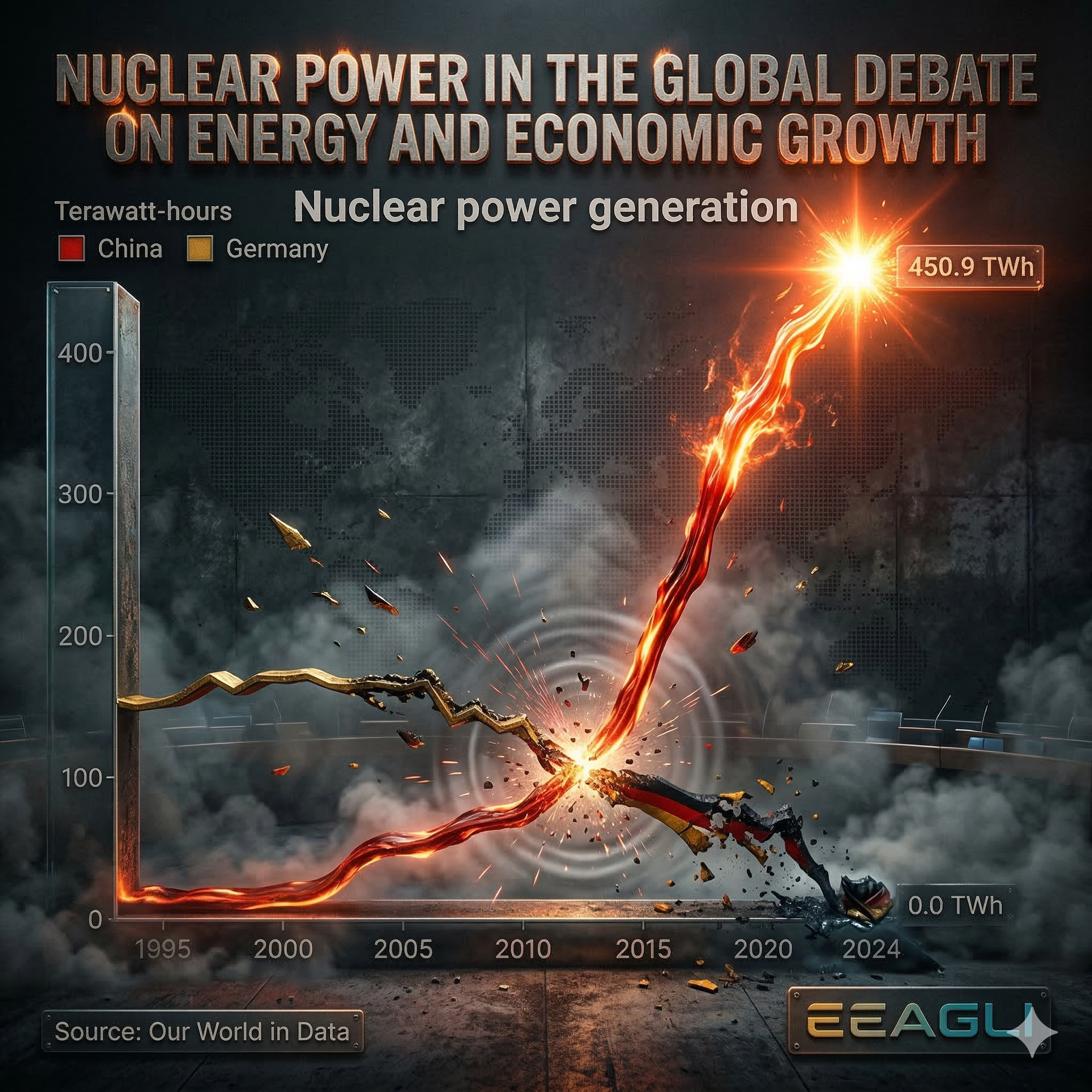
China's rapid deployment of Nuclear Energy — 57 operating reactors totaling about 57 GW and an estimated 29–36 reactors under construction or planned — is reshaping global power dynamics. This comparison with Germany's reactor phase-out foregrounds trade-offs between reliability, grid integration, and long‑term environmental costs.
Did You Know?
China operates 57 reactors totaling ~57 GW and has 29–36 reactors listed as under construction/planned in 2026 sources, underscoring the scale of its Nuclear Energy expansion.
Source: IAEA PRIS Database; China draft Five-Year Plan (March 2026); World Nuclear Performance Report 2025
You will learn specific metrics drawn from the IAEA PRIS Database and the World Nuclear Performance Report 2025, evidence on Hualong One deployments, and how China's draft Five‑Year Plan signals future builds. The post will compare levelized costs, lifecycle emissions, and system resilience against Germany's Energiewende choices.
Subsequent sections deploy data, examples, and policy analysis aimed at energy planners and informed readers seeking actionable insight rather than abstract rhetoric.
Global energy transition: scale and trends
Global primary energy expanded roughly 15× during the 20th century, driven by industrialization and transport. Around 2000 fossil fuels comprised about 80% of primary energy (Energy Institute's Statistical Review), a legacy that shaped infrastructure and emissions profiles.
Diversification and faster electrification—from utility-scale wind and solar to battery systems—are essential to decarbonization. Nuclear Energy continues to offer firm low‑carbon baseload alongside options for high‑temperature process heat.
Key transition points
20th‑century growth
Global primary energy demand expanded roughly 15×, driven by industrialization and transport.
Fossil‑fuel dominance (~2000)
Around 2000 fossil fuels accounted for ~80% of primary energy, shaping infrastructure and markets.
Diversification & electrification
Electrifying transport and industry plus diversified supply (wind, solar, Nuclear Energy) are central to decarbonization.
Beyond electricity
Decarbonization must supply non‑electric outputs such as hydrogen and industrial process heat.
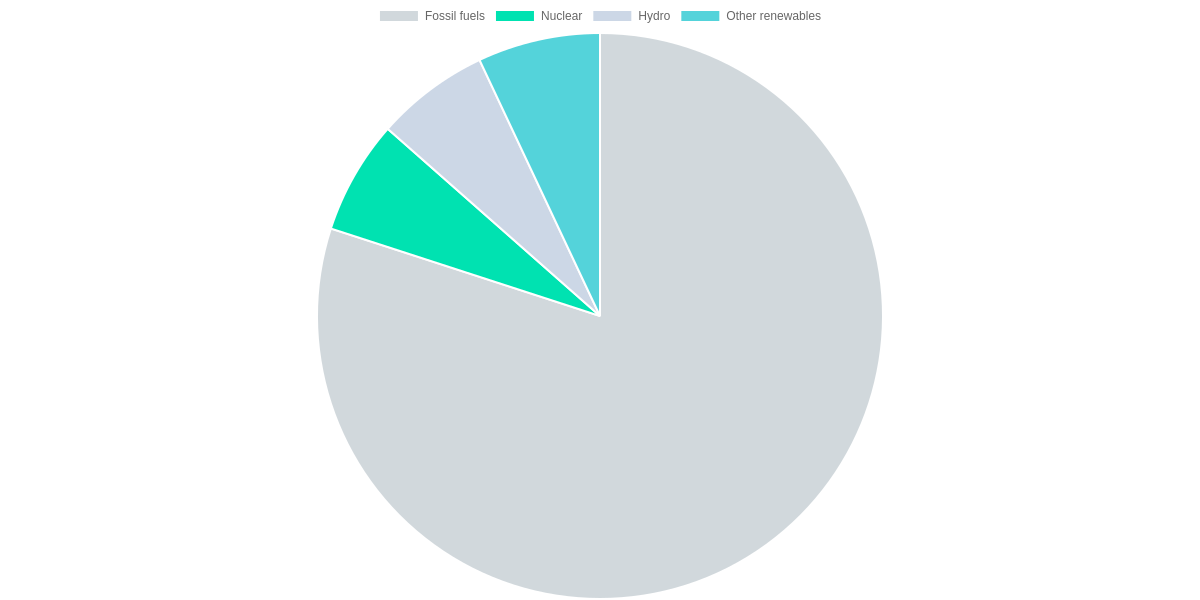
Global primary energy mix circa 2000 — illustrative distribution
Decarbonization must also provide non‑electric outputs such as hydrogen for refining and steelmaking; Siemens Silyzer and other electrolyzer technologies illustrate commercial pathways. Planners rely on the IAEA PRIS Database and World Nuclear Performance Report 2025 to align capacity, builds, and retirements.
Nuclear today: technology, capacity, and innovation
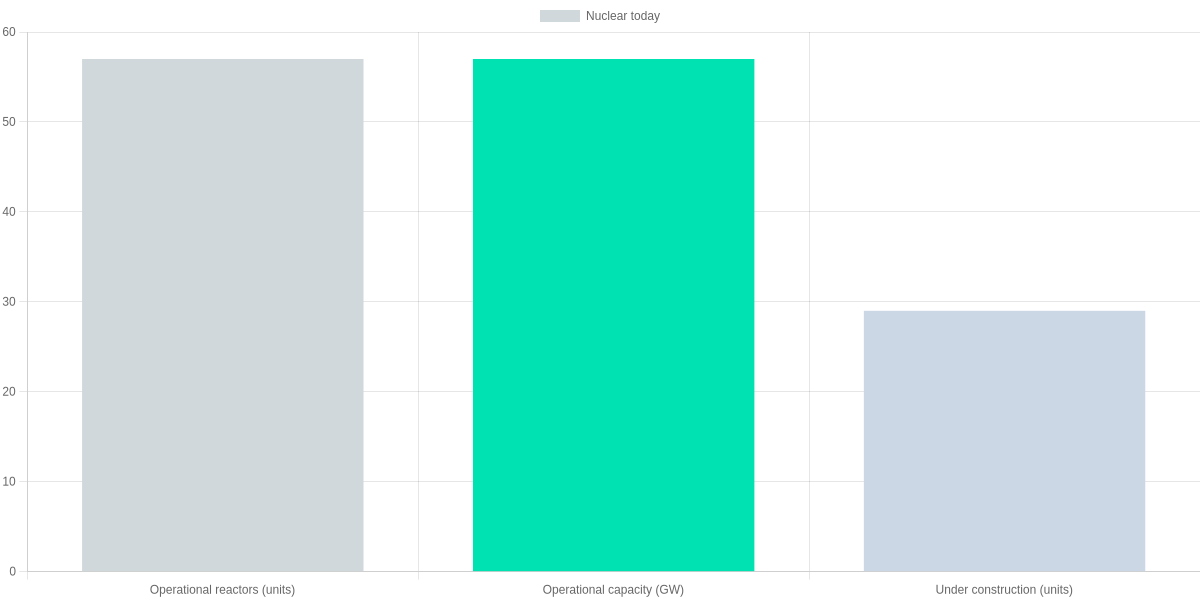
China’s current reactor mix blends Gen II/II+ legacy plants with a rapid roll‑out of Gen III/III+ designs such as AP1000, Hualong One (HPR1000) and CAP1400. The fleet totals 57 reactors (~57 GW) with 29–36 units reported under construction in IAEA PRIS and China’s draft Five‑Year Plan.
Commercial deployment is complemented by demonstration projects: HTR‑PM high‑temperature modular units, the CFR‑600 sodium‑cooled fast reactor, and ACP100/Linglong One SMR development work. Research on Gen IV concepts and closed fuel cycles targets waste minimization and higher burnup using advanced fuels and HALEU pathways.
Innovation—modular construction techniques, digital twins, and factory fabrication—aims to shorten schedules and lower levelized costs. SMRs promise siting flexibility for grid support and industrial heat, while Hualong One exports underpin an industrial strategy for supply‑chain scale.
Policy drivers are clear: energy security, carbon targets, and an export agenda that leverages state champions like CNNC and CGN. These choices contrast with Germany’s phase‑out but illustrate how technology, capacity, and industrial policy interlock in China’s expansion.
Technology and capacity snapshot
Operational: 57 reactors (~57 GW).
Under construction: 29–36 units.
Key technologies: AP1000, Hualong One, HTR‑PM, CFR‑600 demo.
China’s nuclear innovation highlights
Mix of Gen II/III fleets and aggressive Gen III+ deployment, active SMR and Gen IV R&D, and policy-driven industrial export strategy. Operational ~57 reactors (~57 GW) with 29–36 units under construction.
- ✓ AP1000, Hualong One (HPR1000), CAP1400 deployments
- ✓ HTR‑PM, CFR‑600, ACP100 SMR development
China vs Germany: contrasting national strategies
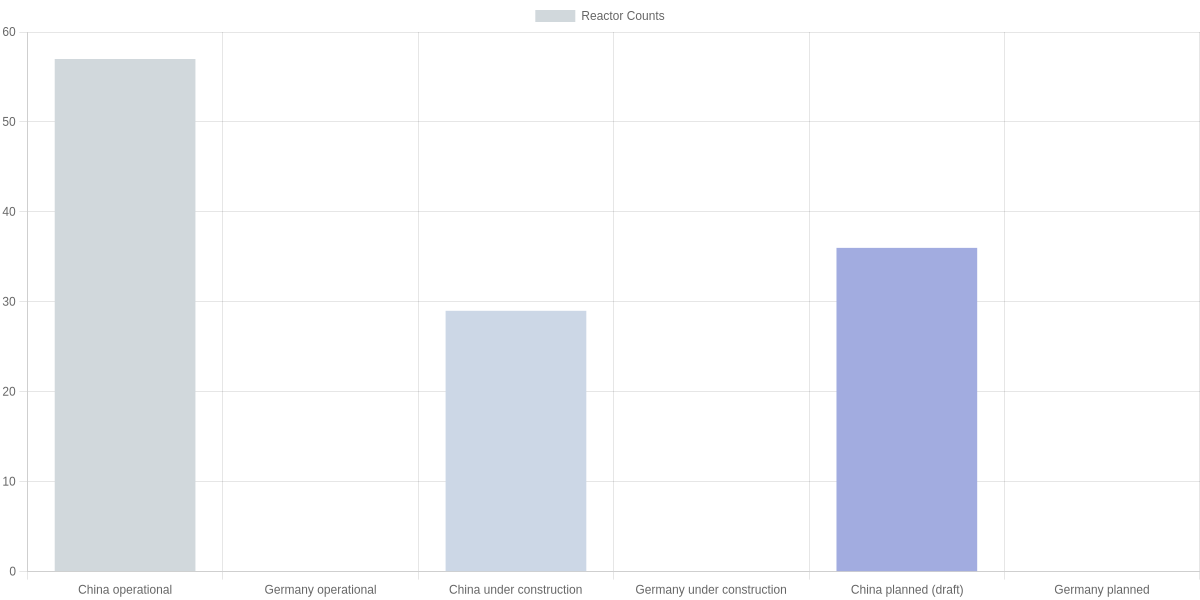
China combines a state-led, capacity-driven expansion with export ambitions and strategic signaling. As of March 2026 China operates 57 reactors (~57 GW) and is pursuing builds (29 reactors under construction; draft plans cite 36 planned).
Analyst action steps
Quantify fleet differences
Compile operational, under-construction, and planned reactor counts from IAEA PRIS and China 2026 plan.
Assess emissions sensitivity
Apply the 0.26–0.32% CO2/capita reduction per 1% nuclear share to scenarios.
Measure economic impacts
Compare wholesale prices, ETS exposure, and coal backfill costs for Germany vs China.
Model energy security
Run import/export and reserve margin scenarios to test supply resilience.
Germany moved the opposite direction after Fukushima, accelerating early retirements and completing its phase-out in 2022. That shift required short-term coal and increased gas imports, raising electricity prices and ETS exposure while complicating energy security.
Economically, coal backfill increased pollution costs and constrained Germany's near-term emissions reductions; China accepts higher upfront capital to lock in low-carbon baseload. Both approaches carry trade-offs for industrial competitiveness and social costs.
| Feature | Hualong One (CNNC) | AP1000 (Westinghouse) | EPR (Framatome) |
|---|---|---|---|
| Typical gross capacity (MWe) | ~1150 | ~1117 | ~1650 |
| Units operational in China (approx) | 6+ | 4 | 0 |
| Construction/lead time (years) | ~5–7 | ~5–7 | ~6–8 |
| Export footprint | Pakistan, planned exports | Built in China (Sanmen/Haiyang), US projects | Finland, UK projects |
| Design focus | Domestic standardization & cost control | Passive safety systems | High output, European market |
Quantitative sensitivity
Sensitivity analysis shows modest nuclear-share growth yields measurable CO2 benefits: a 1% increase in nuclear share reduces CO2 per capita by about 0.26–0.32% long-term. Use IAEA PRIS and World Nuclear Performance Report inputs to model scenarios and test price, ETS, and security outcomes.
Policy choices shape trajectories: China's state financing and standardized Hualong One rollout reduce unit costs and support exports, while Germany's market-driven renewables push targets net-zero by 2050, raising near-term prices. Analysts should compare wholesale price differentials, socialized decommissioning costs, and cross-border grid adequacy when projecting outcomes.
Model runs must include ETS price trajectories and health-cost estimates for coal backfill; Germany's emissions rose temporarily where coal backfill occurred. Scenario sets should stress-test fuel availability, dispatchable capacity, and diplomatic risks linked to import dependencies.
Systems integration, economics, and environmental trade-offs
China's 57 reactors (≈57 GW) deliver firm baseload while Germany's phase‑out forces reliance on wind, solar and storages. Baseload nuclear reduces intermittency risk, but Lazard LCOE trends show steep cost declines for onshore wind and utility‑scale solar.
Integration Steps
Baseload vs Flexibility
Nuclear provides steady 57 GW (57 reactors) in China; balance with wind/solar intermittency through grid services.
Hybrid Pairings
Combine AP1000/CGN Hualong One reactors with Tesla Megapack storage and GE Haliade-X wind for dispatchable mixes.
Sector Coupling
Use electrolyzers (Siemens Energy) to produce e‑fuels during surplus renewables for industrial heat and transport.
Hybrid strategies pair AP1000 or CGN Hualong One units with Tesla Megapack batteries, GE Haliade‑X turbines and Siemens Energy electrolyzers to supply dispatchable power and e‑fuels for industry and transport.
Lifecycle assessments—drawn from IAEA PRIS and the World Nuclear Performance Report 2025—show low operational emissions for reactors but higher upstream impacts from uranium mining and decommissioning.
Policy levers—carbon pricing, capacity markets, expedited permitting, and coordinated grid planning—are decisive to align LCOE, build timelines and a resilient, diversified low‑carbon system.
Governance, public perception, and geopolitics
China vs Germany: Governance and Public Perception
China: Hualong One & CAP1400 Expansion
State-led deployment, 57 reactors (~57 GW) operational; 29–36 reactors under construction per 2026 sources. Governance centers on National Nuclear Safety Administration (NNSA) and China National Nuclear Corporation (CNNC).
- • Operational fleet: 57 reactors (~57 GW)
- • Under construction: 29–36 reactors (2026 sources)
- • Key designs: Hualong One (HPR1000), CAP1400
- • IAEA PRIS & World Nuclear Performance Report 2025 cited for data
- • Public acceptance influenced by proximity, risk perception, and local compensation programs
Germany: Energiewende & Waste Governance
Phase-out driven by Energiewende policy; regulatory oversight by Bundesamt für kerntechnische Entsorgungssicherheit (BfE) and Bundesumweltministerium. Ongoing debates over high‑level waste repository and Konrad for low/intermediate-level waste.
- • Completed reactor exits under Energiewende policy; nuclear liability and decommissioning obligations enforced
- • Unresolved high‑level waste repository strategy; Konrad for low/intermediate waste
- • Public acceptance shaped by education, accident concerns (Fukushima memory), and proximity
- • Governance needs: transparent decommissioning, international safety cooperation
Public acceptance drivers
Proximity to Hualong One or CAP1400 sites, education on radiation, and perceived accident risk shape acceptance. Memories of Fukushima amplify opposition in Germany under Energiewende; transparency around waste management drives trust. IAEA PRIS data and local compensation programs influence local sentiment.
Governance requirements
Robust independent regulators such as China’s NNSA and Germany’s BfE are required, along with enforceable decommissioning funding and credible waste strategies. International safety cooperation, peer review by IAEA, and public access to environmental impact assessments mitigate risk perceptions.
Geopolitical trade-offs
China’s buildout reduces exposure to imported fuels but raises proliferation scrutiny given enrichment and reprocessing capabilities. Germany’s phase‑out lowers domestic nuclear risk yet heightens reliance on LNG and critical‑mineral imports, exposing supply‑chain vulnerabilities during conflicts. Policy must balance energy security against non‑proliferation and resource dependence.
Transparency on repositories, CNNC vendor liability, and active civil society engagement plus IAEA peer reviews and funding guarantees are essential to maintain legitimacy over time globally.
Frequently Asked Questions
The answers below reference IAEA PRIS data and concrete examples such as Finland’s Onkalo, France’s Orano/La Hague, and SMRs like NuScale.
China operates 57 reactors (≈57 GW) while its large construction programme increases global scale and supply-chain implications. Economic competitiveness depends on financing, capacity factor, and market design; NuScale and Rolls-Royce SMR target shorter schedules to improve costs.
Is nuclear energy safe compared with other large-scale energy sources? ▼
How is nuclear waste managed and what are long-term disposal options? ▼
Can nuclear compete economically with renewables and storage? ▼
What are SMRs and when might they scale? ▼
Does expanding nuclear reduce geopolitical energy risks? ▼
Conclusion
🎯 Key takeaways
- → China: 57 operational reactors (~57 GW) with 29–36 under construction — Draft 15th Five‑Year Plan signals continued build-out.
- → Germany: policy-driven phase‑out reduces domestic Nuclear Energy capacity; focus shifts to renewables and grid flexibility.
- → Next steps: use IAEA PRIS Database and World Nuclear Performance Report 2025 to align investment, grid planning, and cross‑border cooperation.
China operates 57 reactors (≈57 GW) and is building 29–36 more under the Draft 15th Five‑Year Plan, sustaining global expansion in Nuclear Energy. Germany’s policy‑driven phase‑out reduces domestic nuclear capacity and shifts emphasis to renewables, storage, and grid flexibility. These divergent strategies underscore supply, policy, and investment contrasts that affect European and Asian electricity markets.
Next steps
Harmonize planning using IAEA PRIS Database to track builds and decommissions.
Reference World Nuclear Performance Report 2025 for performance benchmarks and risk metrics.
Coordinate cross‑border investment and grid upgrades to balance China expansion and Germany phase‑out impacts.
Stakeholders—governments, utilities, and investors—should adopt scenario analysis, align timelines, and prioritize resilience while tracking IAEA and WNPR metrics to inform capital allocation and regulatory reform urgently.
TL;DR: China’s rapid nuclear build—57 operating reactors (~57 GW) with a further 29–36 units listed as under construction or planned—represents a major scale-up using Gen III designs (AP1000, Hualong One, CAP1400) and is documented in IAEA PRIS, the World Nuclear Performance Report 2025, and China’s draft Five‑Year Plan. The post contrasts this expansion with Germany’s reactor phase‑out to evaluate trade‑offs in reliability, grid integration, levelized costs, lifecycle emissions and system resilience, offering data‑driven insights for energy planners.
Comments
Post a Comment