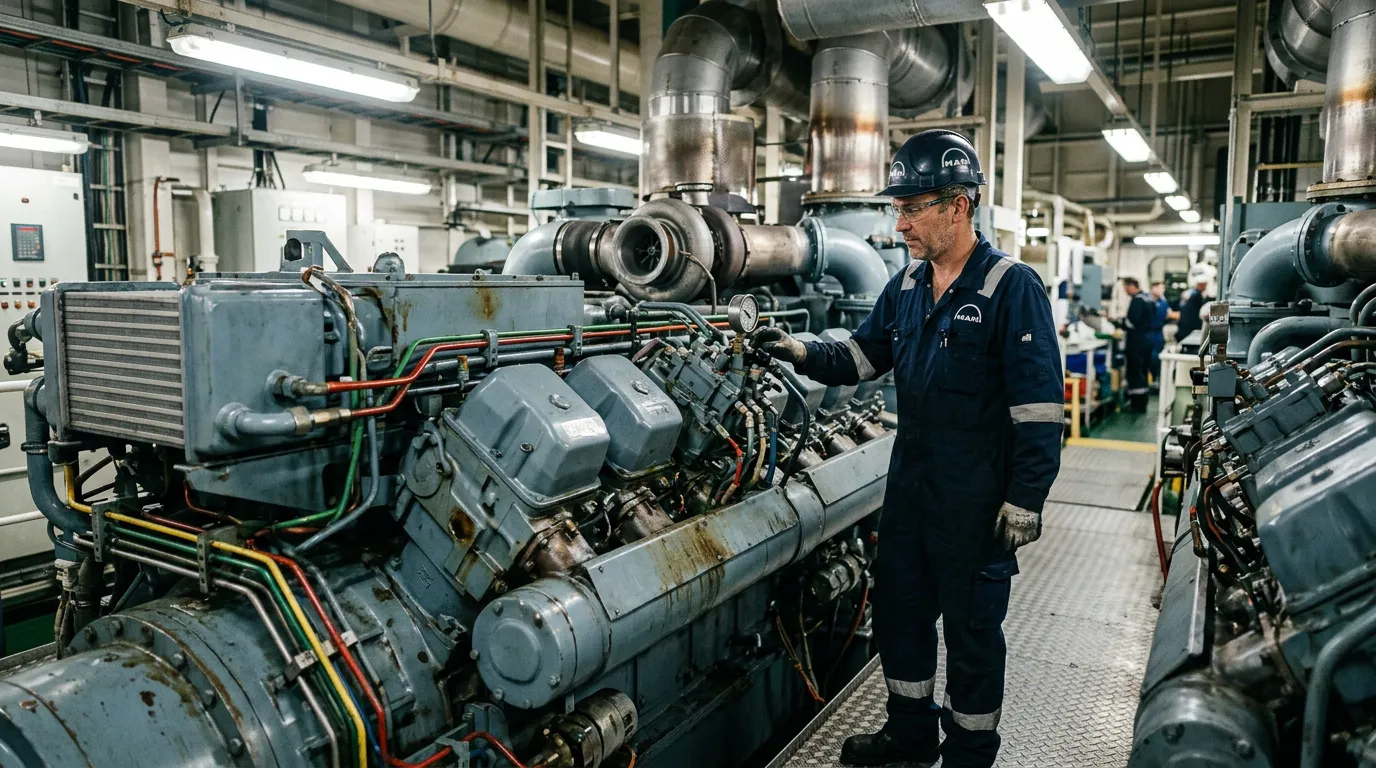
Picture this: you’re about to board a luxury cruise liner, thinking about the vacation ahead, unaware that the invisible machine beneath your feet is revolutionizing the shipping industry—meet the MAN5160DF, a dual fuel engine that represents a turning point in marine engineering. Its size and capability are mind-boggling, yet its efficiency holds promise for our planet's future. Join me as we unravel the complexities and innovations of this incredible technology.
Understanding the MAN5160DF: A Colossal Feat of Engineering
The MAN5160DF engine stands as a true marvel in the world of marine engineering. It's not just a piece of machinery; it's a massive power plant designed to drive some of the largest ships on the planet. To truly appreciate its significance, we need to explore its size, power, and role in shaping global shipping.
Size Comparisons: A Giant in the Maritime World
When you think of a typical engine, you might picture something small or at least manageable. But the MAN5160DF defies that expectation. It measures approximately 13.5 meters long—roughly the length of a two-story house—and stands about 6.5 meters high. Weighing over 400 metric tons, this engine is more like a floating fortress than a machine.
To put it into perspective, imagine a building-sized structure sitting on the deck of a ship, with engineers standing next to it looking like tiny figures. Its sheer size is a testament to its capability to generate enormous power, which is essential for propelling large vessels across oceans.
Power Output and Configuration Options
The power output of the MAN5160DF is equally impressive. It can produce up to 20,000 kilowatts (kW) of energy—enough to power a small town or a sizable suburb. This high level of power is achieved through various configurations, with the most common being the V-type engine with up to 18 cylinders.
In its most robust form, the 18V configuration resembles a fortress of metal, designed to handle the immense stresses of marine operation. This flexibility in configuration allows shipbuilders and operators to tailor the engine to specific vessel sizes and operational needs, making it a versatile choice in the industry.
Importance of the Engine in Global Shipping
The MAN5160DF plays a critical role in global shipping. It serves as the heartbeat of many large cargo ships, tankers, and cruise liners. As the backbone of modern shipping logistics, this engine ensures the timely delivery of goods, from everyday consumer products to essential raw materials.
"The MAN5160DF is not just a machine; it's the backbone of modern shipping logistics." - Industry Expert
Understanding the size and power of this engine helps us grasp its impact on international trade. Without such colossal machines, the movement of goods across continents would slow dramatically, affecting economies worldwide. Its ability to operate efficiently while adapting to future fuel options also makes it a vital asset for the evolving maritime industry.
In essence, the MAN5160DF embodies a remarkable blend of engineering prowess and strategic importance. It’s a giant that keeps the wheels of global commerce turning smoothly, representing a significant shift in how we think about marine propulsion technology.
The Dual Fuel Revolution: Balancing Power and Pollution
In maritime engineering, dual fuel technology refers to engines capable of running on two different types of fuel—most commonly, liquefied natural gas (LNG) and traditional heavy fuel oil. This innovation is transforming how ships operate, offering a way to maintain high levels of power while significantly reducing environmental impact.
Understanding Dual Fuel Systems in Maritime Engineering
Dual fuel engines, like the MAN5160DF, are designed to seamlessly switch between LNG and heavy fuel oil without stopping the engine or losing speed. This capability is crucial for ships that need to adapt to varying fuel availability and regulatory environments. The engine's control system monitors conditions in real-time, automatically switching fuels when necessary, ensuring continuous operation and safety.
Benefits of Using LNG Versus Heavy Fuel Oil
Switching to LNG offers notable advantages in reducing harmful emissions. When running on LNG, the MAN5160DF can cut CO2 emissions by up to 25% compared to heavy fuel oil. Additionally, in gas mode, it reduces nitrogen oxides (NOx) by 85% and sulfur oxides (SOx) by 99%. These reductions are critical for meeting strict international emission standards, such as the IMO Tier 3 regulations, which aim to improve air quality in port cities and coastal regions.
Environmental Implications of the MAN5160DF
The environmental impact of the MAN5160DF's dual fuel system is significant. By enabling ships to operate on cleaner LNG, it directly addresses the maritime industry's pollution problem. The engine's ability to switch fuels instantly means ships can comply with local environmental regulations without sacrificing operational efficiency. This flexibility helps reduce the shipping industry's overall carbon footprint and local air pollution, making maritime transport more sustainable.
Challenges in the Transition to Greener Fuels
Despite these benefits, transitioning to greener fuels like LNG presents challenges. Infrastructure for LNG bunkering is still developing, and the initial costs of retrofitting ships or building new dual fuel engines can be high. Moreover, while LNG reduces many pollutants, it is still a fossil fuel, and its extraction and transport have environmental impacts. The industry must balance the immediate benefits of cleaner emissions with the long-term goal of zero-carbon shipping.
"Balancing efficiency and environmental responsibility has never been more critical in shipping." - Marine Engineer
The Role of Dual Fuel Technology in Sustainable Shipping
The MAN5160DF exemplifies how dual fuel technology can be a bridge toward a greener maritime future. Its capacity to switch between LNG and heavy fuel oil allows operators to optimize for cost, availability, and environmental standards. This flexibility is vital as the industry moves toward adopting synthetic fuels and other low-carbon options.
While the engine effectively mitigates harmful emissions when using LNG, the transition to fully sustainable fuels remains a work in progress. The ability to adapt fuels as technology and regulations evolve ensures that ships equipped with engines like the MAN5160DF will stay resilient in a rapidly changing world.
Smart Technology: The Role of Sacone in Operation
Introduction to the Sacone System: A Game Changer
In the realm of modern marine engineering, managing the operation of massive engines like the MAN5160DF requires sophisticated technology. One of the most crucial innovations is the Sacone system. This advanced engine performance management system acts as the brain of the engine, continuously monitoring and controlling every aspect of the engine’s operation. Its role is so vital that it’s often described as a game changer in ensuring both safety and efficiency at sea.
How Sacone Enhances Performance and Safety
The Sacone system is designed to oversee the engine’s complex processes in real-time. It constantly checks parameters such as cylinder pressure, temperature, and fuel injection timing. By doing so, it ensures the engine runs smoothly, optimally, and within safe limits. This level of oversight helps prevent issues like knocking, misfires, or overheating, which could lead to costly repairs or dangerous situations.
"In the world of massive engines, speed is safety, and Sacone is the heartbeat that keeps everything in check." - Technology Consultant
Moreover, Sacone’s ability to manage dual fuel operations—switching seamlessly between gas and liquid fuels—relies heavily on its precision. It ensures that transitions happen without any loss of power or safety, even under full load conditions. This capability is especially important in scenarios where environmental regulations or fuel availability change unexpectedly.
The Importance of Millisecond-Level Adjustments
One of Sacone’s most impressive features is its capacity for millisecond-level adjustments. When managing combustion, especially in a dual fuel engine, timing is everything. The system reacts almost instantaneously to any fluctuations, adjusting parameters like fuel injection and pressure to maintain optimal combustion. This rapid response prevents engine knocking, reduces emissions, and maximizes fuel efficiency.
For example, if the system detects early signs of knocking—a damaging vibration—it immediately alters the injection timing or gas mixture. These adjustments happen so quickly that they are practically invisible to the crew, ensuring continuous, safe operation.
Comparison with Traditional Engine Monitoring Systems
Feature | Traditional Monitoring Systems | Sacone System |
|---|---|---|
Monitoring Scope | Limited to basic gauges and manual checks | Continuous, real-time monitoring of every cylinder and pressure point |
Adjustment Speed | Manual or slow automatic responses | Automatic, millisecond-level adjustments |
Safety & Efficiency | Dependent on crew vigilance and reaction time | Proactive management, reducing risks and improving performance |
Fuel Management | Basic control, often reactive | Precise control of combustion, optimizing dual fuel switching |
As the table illustrates, Sacone’s integration of modern monitoring technology marks a significant step forward. It transforms engine management from a reactive process into a proactive, intelligent system that enhances safety and operational efficiency.
The Significance of Sacone in Modern Marine Engineering
Understanding the role of the Sacone system provides valuable insight into how today’s marine engines are evolving. It exemplifies the shift toward automation, precision, and safety in managing some of the world’s largest and most complex machinery. By continuously overseeing every cylinder and pressure point, Sacone ensures that the engine performs at its best while minimizing risks, making it an indispensable part of the future of maritime propulsion.
Maintenance Made Easier: The Engineering Behind Design
One of the biggest challenges with traditional marine engines is maintenance. These massive machines are complex, heavy, and require significant effort to service. When something goes wrong, fixing it can mean hours or even days of downtime, which directly impacts shipping profitability. The longer a vessel is out of operation, the more money it costs, making efficient maintenance a top priority in marine engineering.
Traditional Marine Engines and Maintenance Challenges
Conventional large engines often have internal parts that are difficult to access. For example, removing or replacing components like pistons or connecting rods usually involves dismantling large sections of the engine, which is time-consuming and risky. During maintenance, there's a high chance of damaging internal parts, which can lead to costly repairs and extended downtime. This not only affects the ship's schedule but also increases operational costs, reducing overall efficiency and profitability.
Segmented Connecting Rods: A Game-Changer
The innovative design of the MAN5160DF engine introduces segmented connecting rods as a solution to these challenges. Unlike traditional one-piece rods, segmented connecting rods are split into sections that can be detached independently. This means that during routine maintenance, technicians can remove the piston assembly without disturbing the main crankshaft or internal bearings. "The segmented design dramatically improves maintenance procedures," says a marine mechanic, highlighting how this feature simplifies what used to be a complex and risky process.
The Impact of Design on Reducing Downtime
Thanks to the segmented connecting rods, maintenance time is significantly reduced. Instead of hours spent disassembling large engine sections, technicians can quickly detach the top part of the connecting rod, access the piston, and perform inspections or replacements. This streamlined process minimizes the risk of damaging internal engine parts and shortens the time the ship remains stationary.
Traditional Maintenance | Maintenance with Segmented Connecting Rods |
|---|---|
Hours of downtime | Reduced by several hours |
High risk of internal damage during disassembly | Lower risk due to easier access |
Enhancing Operational Efficiency and Shipping Profitability
Reducing maintenance time directly boosts operational efficiency. Ships can return to service faster, ensuring timely deliveries and better scheduling. Less downtime means more trips completed within a given period, which improves overall shipping profitability. Additionally, the lower risk of internal damage during maintenance reduces repair costs, further supporting the financial health of shipping companies.
"Efficiency in maintenance is as crucial as efficiency in performance when it comes to naval engineering." - Marine Mechanic
In summary, the thoughtful engineering behind the MAN5160DF's segmented connecting rods exemplifies how smart design can make maintenance faster, safer, and more cost-effective. This not only benefits the crew by simplifying their work but also provides shipping companies with a competitive edge through increased operational resilience and profitability.
Future-Proofing Shipping: Adaptability of the MAN5160DF
One of the most impressive features of the MAN5160DF engine is its remarkable engine adaptability to future fuel technologies. As the shipping industry faces increasing pressure to reduce emissions and comply with evolving environmental regulations, having a versatile engine that can handle different types of fuels is essential. The MAN5160DF is specifically designed to be compatible with both traditional marine fuels and emerging synthetic fuels, making it a strategic choice for ship owners aiming for long-term operational resilience.
Adapting to Changing Fuel Regulations
Global regulations around shipping emissions are becoming stricter, with many ports and countries implementing tighter standards. The MAN5160DF's dual-fuel capability allows ships to switch seamlessly between heavy fuel oil and natural gas, or even synthetic fuels, without stopping or slowing down. This flexibility ensures compliance with local regulations, such as IMO Tier 3 standards, while maintaining operational efficiency. As shipping market implications continue to evolve, this adaptability means ship owners can avoid costly retrofits or engine replacements in the future.
The Potential of Synthetic Fuels and Their Significance
Looking ahead, synthetic fuels like emethane, HVO, or other renewable-based options are projected to play a significant role in decarbonizing maritime transport. The MAN5160DF engine is built with this future in mind, capable of burning these alternative fuels with minimal modifications. This is crucial because synthetic fuels are expected to become more prevalent as countries and companies commit to net-zero targets. The ability to burn renewable fuels not only reduces greenhouse gas emissions but also provides a pathway for the industry to meet increasingly stringent environmental standards.
Market Implications for Ship Owners and Operators
For ship owners and operators, understanding future fuel markets is vital for making informed investment decisions. The flexibility of the MAN5160DF means they are not locked into a single fuel type, which can be risky given volatile fuel prices and regulatory changes. As projected market projections for shipping fuels over the next decade suggest a shift towards greener options, owning an engine that can adapt to these changes offers a competitive advantage. It reduces the need for costly engine overhauls and ensures compliance, ultimately protecting their investments and maintaining operational continuity.
Ensuring Longevity in a Volatile Environment
The design philosophy behind the MAN5160DF emphasizes longevity and resilience. Its compatibility with synthetic and renewable fuels means that it is future-proof, capable of evolving alongside technological advancements and regulatory shifts. As environmental standards become more demanding, this engine ensures that ship owners can continue to operate efficiently without the fear of obsolescence. The ability to switch fuels on the fly, combined with advanced control systems like sacasone, guarantees that the engine remains relevant and reliable for decades to come.
"With the looming changes in fuel regulations, the adaptability of the MAN5160DF engine positions it uniquely in the industry." - Shipping Analyst
In conclusion, the MAN5160DF exemplifies how modern marine engines are evolving to meet the demands of a changing world. Its ability to adapt to future fuel technologies, especially synthetic and renewable fuels, ensures that it will remain a vital asset in the shipping market for years to come. For ship owners, this means greater operational flexibility, compliance assurance, and a significant step toward sustainable maritime transport. As the industry continues to navigate the complexities of environmental regulations and market volatility, engines like the MAN5160DF will be instrumental in shaping a resilient and sustainable future for global shipping.
TL;DR: The MAN5160DF engine symbolizes a leap in marine technology, blending reliability with environmental concerns through its dual fuel capability.
Comments
Post a Comment