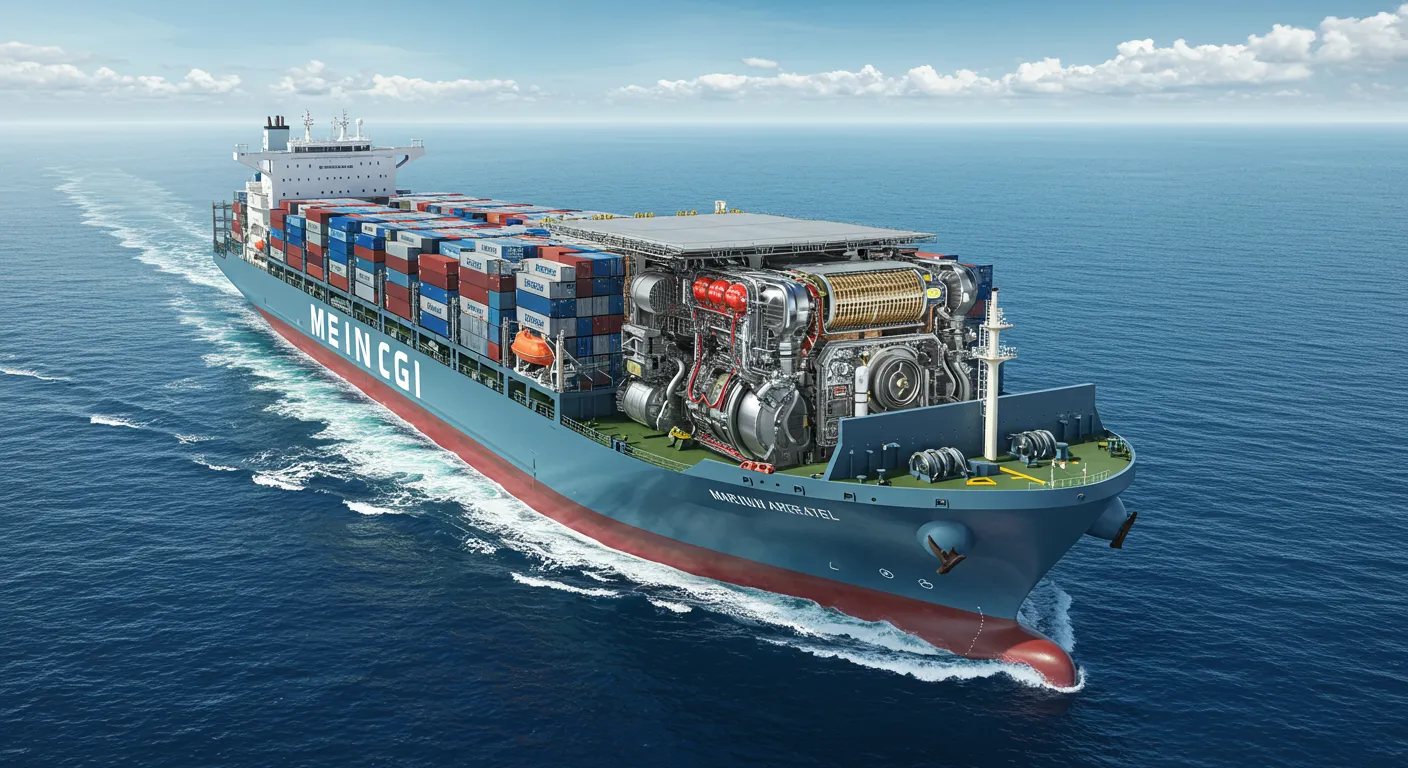
Picture this—I’m standing on the steel deck of a colossus container ship, salt air in my lungs, a faint hum of engines thrumming beneath my boots. What’s keeping this beast moving (and legal) in today’s climate-obsessed world? I didn’t expect the answer to be equal parts rocket science, regulatory chess, and practical shipyard wisdom—until I met the MAN B&W ME-GI. Here’s my no-nonsense, story-charged rundown of the engine that’s making industry veterans nervous, environmentalists curious, and bean counters surprisingly happy.
First Encounters: Why the ME-GI Engine Caught My Eye (and Set Off My Geek Alarm)
My first brush with the ME-GI engine wasn’t in a glossy brochure or a technical seminar—it was on an unexpected backstage tour of an LNG-fueled cargo ship. The chief engineer, Pierre Saudan, greeted me with a grin and a hard hat, eager to show off what he called “the future of marine propulsion.” I didn’t know it yet, but I was about to get a crash course in why the ME-GI engine overview is so much more than just another piece of machinery.
Stepping into the engine room, I braced for the familiar roar and diesel tang. Instead, there was a steady, almost musical hum—something different, something cleaner. “That’s the sound of dual-fuel technology,” Pierre explained. “It’s not just running on diesel anymore.” My geek alarm was officially triggered.
Decades of Know-How, Reimagined
What really struck me was how the ME-GI engine is built on the rock-solid foundation of MAN Energy Solutions’ ME platform. With over 20,000 ME/MC engines installed worldwide, this isn’t some experimental prototype. It’s an evolution—taking decades of marine engine reliability and layering on the magic of dual-fuel operation. The result? A two-stroke marine engine that can switch between LNG, bio/synthetic gas, and traditional fuels like HFO, MDO, and MGO, all without missing a beat—even under full load.
Fuel Flexibility: The Ace in the Hole
Ship operators rave about the ME-GI’s fuel flexibility benefits. Pierre put it best:
"Fuel flexibility is like an insurance policy at sea."
— Pierre Saudan, Chief Engineer, CMA CGM
He told me about a stormy night in the North Atlantic when they had to switch from LNG to marine diesel mid-voyage. The transition was seamless—no loss of power, no drama. “It’s our ace in the hole,” he said, “especially when fuel prices spike or regulations change overnight.”
From Skepticism to Believer
I’ll admit, I was skeptical at first. Was the ME-GI engine just the flavor of the month, or a real game-changer? But after seeing it in action—watching the crew execute a midnight fuel switch during a squall, the engine humming along without a hiccup—I started to get it. The ME-GI isn’t just about emissions or efficiency (though it excels at both). It’s about giving operators choices, resilience, and peace of mind on the high seas.
ME/MC Engines Installed | ME-GI Engines Sold/Running/On Order | ME-GI Operating Hours |
|---|---|---|
20,000+ | 300+ | 1.5 million |
That’s why the ME-GI engine caught my eye—and why it keeps setting off my geek alarm every time I step aboard a ship powered by this dual-fuel marvel.
Inside the Beast: How Dual-Fuel Technology Actually Works (With Anecdotes)
The High-Pressure Diesel Cycle—Explained in Plain English (and a Pizza Oven Analogy)
Imagine you’re baking pizza. You want the oven hot—really hot—so the dough cooks instantly when it hits the stone. That’s basically what the ME-GI’s high-pressure diesel cycle does for fuel. Instead of premixing gas and air like a regular kitchen stove, this engine compresses air until it’s scorching, then injects gas at up to 300 bar—that’s like inflating your bike tire with Thor’s hammer. The result? The gas ignites right away, just like that pizza crust sizzles the moment it touches the oven stone. This direct, high-pressure injection is what allows the engine to run efficiently and with very low methane slip, no matter which fuel it’s using.
Why a Spritz of Pilot Oil is the Unsung Hero of Reliable Ignition
Here’s the twist: methane (the main part of LNG) won’t light up just from heat and pressure alone. Enter the pilot oil injection system. Just before the main gas blast, the engine injects a tiny amount—sometimes as low as 1.5% of total energy—of marine gas oil. This “spritz” of pilot oil acts like the match for your bonfire. As Lars Jensen, Senior Marine Engineer, puts it:
“Think of pilot oil as the kitchen match that gets your bonfire—and your engine—roaring.”
That tiny burst of oil ignites instantly, setting off the main gas charge for smooth, reliable combustion.
Timing is Everything: Closing Exhaust Valves and Avoiding Methane Slip
Here’s where the engine control system gets clever. Gas is injected only after the exhaust valve closes. Why? If you inject too early, some gas escapes straight out the exhaust—wasting fuel and releasing methane, a potent greenhouse gas. By timing the injection just right, the ME-GI keeps nearly all the gas inside the cylinder, ready to burn. This is the secret to its ultra-low methane slip.
Firsthand: Watching the Dual-Fuel Switch in the Control Room
I’ll never forget the first time I watched a dual-fuel switch from LNG to diesel in the control room. I half-expected alarms or, honestly, something dramatic. But the engine control system handled it so smoothly, the only sign was a few numbers changing on the screen. No drama, no explosions—just seamless, safe transition. That’s the beauty of this tech.
The Duo That Matters: Gas Injection Valves and Pilot Fuel Valves
At the heart of this system are the gas injection valves (GIVs)—two per cylinder, each engineered to handle those 300 bar pressures—and the pilot fuel valves, delivering that perfectly timed oil spritz. These components, managed by precise electronic controls, are what make dual-fuel technology both robust and reliable.
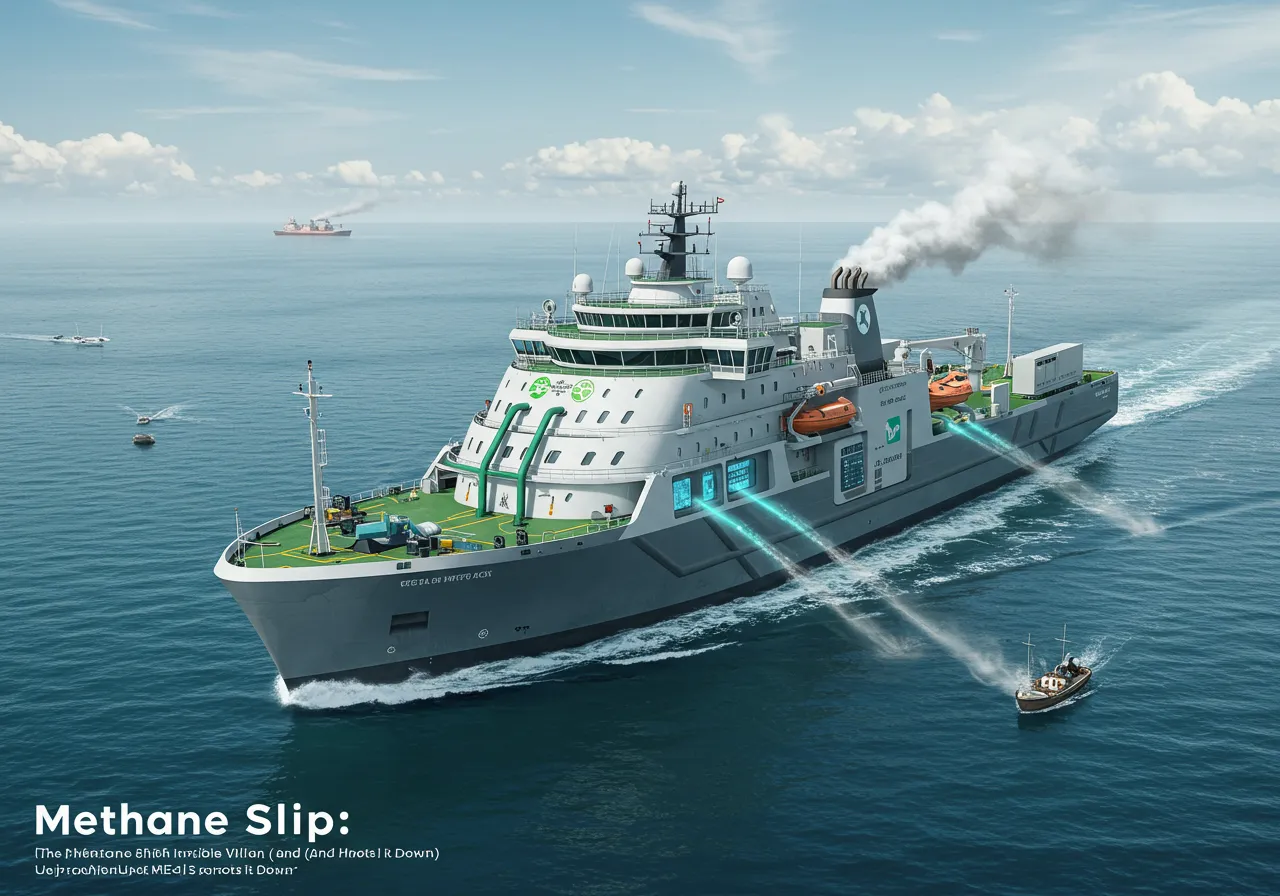
Methane Slip: The Invisible Villain (and How ME-GI Shoots It Down)
If you’re new to the world of LNG marine engine emissions reduction, let me introduce you to the sneaky troublemaker: methane slip. Methane may sound harmless, but here’s the kicker—over a 20-year period, it’s about 80 times more powerful than CO2 at trapping heat in our atmosphere. That means even tiny amounts of unburned methane escaping from a ship’s exhaust can have a huge climate impact. This is where methane slip management becomes absolutely critical for future-proofing shipping operations.
So, what exactly is methane slip? In simple terms, it’s the unburned methane that escapes from the engine during operation. For older gas engines, this was a big problem—think of it like popcorn kernels flying out of the microwave before they’re popped. But here’s where the ME-GI engine changes the game.
How ME-GI Tackles Methane Slip
The ME-GI’s secret weapon is its high-pressure, late-cycle gas injection. Instead of injecting gas early (when it could get swept out with the exhaust), the ME-GI injects it after the exhaust valve closes. This means almost all the methane stays trapped inside the cylinder, ready to be burned. The result? Methane slip emissions are slashed to industry-leading lows—just 0.2–0.3 grams per kilowatt-hour. For context, older dual-fuel engines can have slip rates several times higher. It’s a slam dunk for clean shipping.
Or, to use my favorite sketchy metaphor: the ME-GI is like a chef who catches every last popcorn kernel before it escapes the microwave—nothing wasted, nothing lost to the air.
Sidebar: The Future of Methane Slip Reduction
And it gets better. New tech like oxidation catalysts is already being tested, with the potential to chop methane slip by another 70%. The future of methane slip management is looking even brighter.
"Low methane slip isn’t just green—it's regulatory gold." — Maria Spanos, Emissions Compliance Consultant
ME-GI Engine Emissions Comparison: HFO vs LNG
Fuel | Methane Slip (g/kWh) | SOx | NOx | CO2 |
|---|---|---|---|---|
HFO | 0 | High | Baseline | Baseline |
LNG (ME-GI) | 0.2–0.3 | Near Zero | 20–30% Lower | 20–25% Lower |
With this kind of performance, the ME-GI isn’t just keeping ships compliant with today’s rules—it’s setting them up for tomorrow’s. Methane slip reduction is no longer a nice-to-have; it’s the backbone of LNG marine engine emissions reduction strategies. And with numbers like these, the ME-GI is leading the charge.
Operational Sorcery: Engine Efficiency, Seamless Fuel Switching, and Cost Savings
Let me take you right into the heart of what makes the ME-GI marine engine a game-changer for anyone who cares about marine engine efficiency, operational cost savings, and true fuel flexibility. If you’ve ever been on a bridge during a mid-ocean fuel switch, you’ll know the tension. But with the ME-GI, it’s almost a non-event. As Tomas Keller, a vessel chief engineer, put it:
"We used to dread switching fuels. Now? I barely notice—except when the chief offers coffee."
Engine Efficiency: Best-in-Class Thermal Performance
The numbers speak for themselves. The ME-GI consistently delivers around 50% thermal efficiency—that’s nearly the best you’ll find in the marine world, regardless of whether you’re running on LNG or switching back to marine diesel. This high efficiency isn’t just a technical brag; it means less fuel burned for the same power, directly translating to lower operational costs and reduced CO2 emissions. For operators, that’s a win-win: compliance and savings, all in one stroke.
Seamless Fuel Switching: Flexibility Without Compromise
Here’s where the operational sorcery really shines. The ME-GI’s dual fuel system lets you switch from gas to oil—or vice versa—on the fly, even under full load. No loss of speed, no drama. The system is smart enough to automatically fall back to liquid fuel if there’s ever a hiccup with the gas supply. That’s real peace of mind when you’re far from shore.
Fuel flexibility means you can always choose the most cost-effective or regulation-friendly option.
Automated safety fallback keeps the ship moving, no matter what.
Cost Savings: Every Drop Counts
With pilot oil fractions as low as 1.5% of total energy input, the ME-GI slashes the use of expensive MGO. Less pilot oil means lower costs and fewer emissions. Maintenance stories from the engine room echo this: fewer leaks, less downtime, and headaches kept to a minimum. The new cylinder cut-out tech is a lifesaver—if one cylinder has a hiccup, it switches to liquid fuel while the rest keep running on gas. No more full-engine shutdowns for minor issues.
Reliability: Proven Over Millions of Hours
With over 1.5 million operating hours logged across the global fleet, the ME-GI’s reputation for reliability is well-earned. Fewer breakdowns mean ships stay on schedule and avoid costly detours—or worse, waiting for a tug.
Chart: Efficiency, Emissions, and Cost Savings
Engine Type | Thermal Efficiency (%) | CO2 Emissions (g/kWh) | Fuel Cost Savings (%) |
|---|---|---|---|
ME-GI (LNG) | ~50 | -20 to -25% | Up to 30% |
Conventional Diesel | ~47 | Baseline | 0 |
Low-Pressure Dual Fuel | ~45 | -15% | 10-15% |
In real-world terms, the ME-GI’s operational magic is about keeping ships moving, costs down, and options open—no matter what the ocean throws your way.
Safety and Reliability: Going Beyond the Brochure
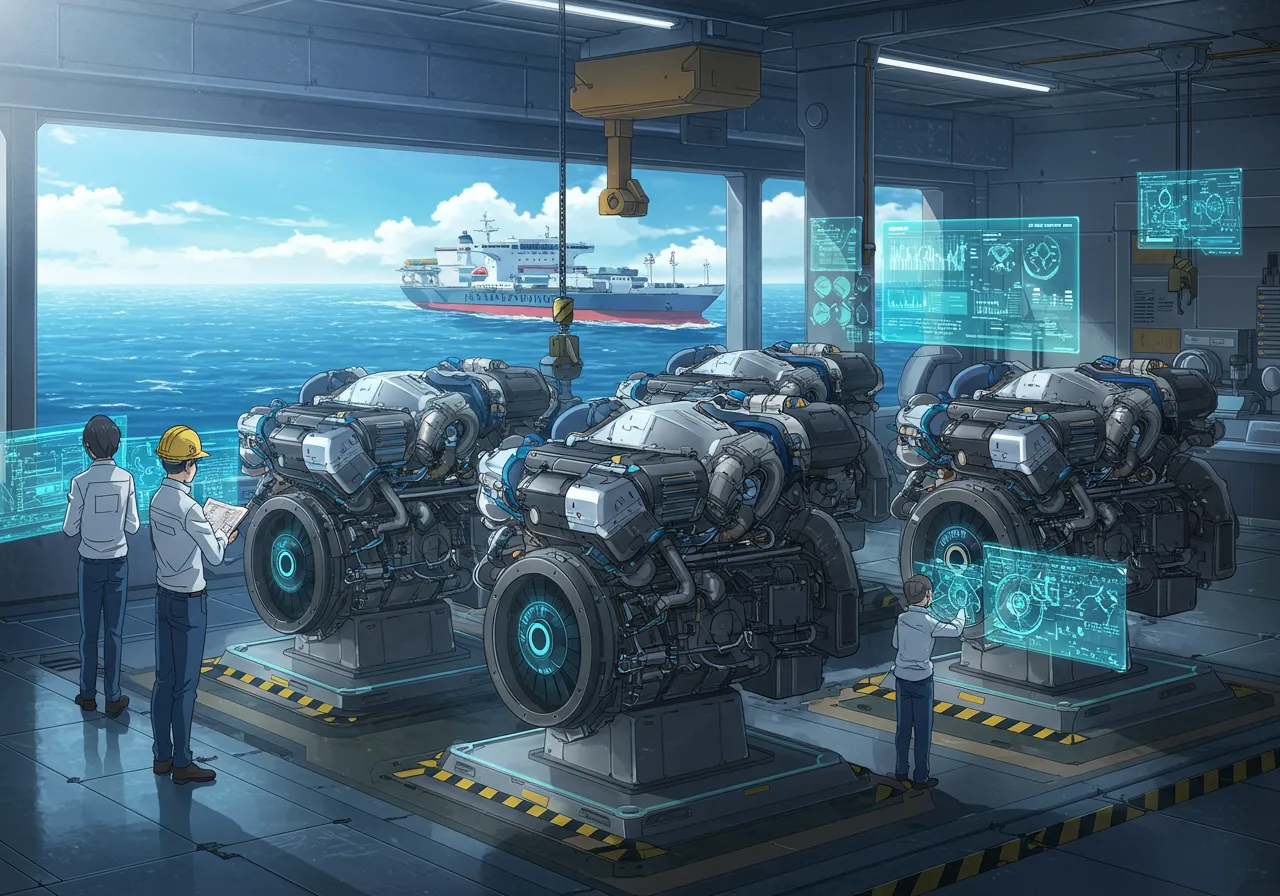
Let’s be honest—when you’re out at sea, the last thing you want is a “white-knuckle moment” because your main engine decides to throw a tantrum. That’s where the ME-GI marine engine really shines. It’s not just about what’s on the glossy brochure; it’s about the robust, real-world safety features and proven marine engine reliability that keep ships moving, no matter what the ocean throws at you.
Built-In Safety: More Than Just a Checklist
First up, let’s talk about the double-walled gas pipes. This isn’t just a technical detail—it’s a frontline defense. The inner pipe carries high-pressure gas, while the outer pipe acts as a safety shell. The space between them is constantly monitored by hydrocarbon sensors. If there’s even a hint of a leak, alarms sound and ventilation kicks in before gas can build up. It’s a simple idea, but it’s saved more than a few headaches (and possibly worse) in engine rooms worldwide.
Another unsung hero? The oil seal system. Hydraulic oil, kept at a higher pressure than the gas, creates a barrier that stops gas from sneaking into control systems. It’s one of those details you don’t notice—until you realize how much trouble it prevents.
Redundancy: The Secret to Guaranteed Uptime
Redundancy isn’t just a buzzword here—it’s a design philosophy. The ME-GI’s fuel gas supply system uses a three-unit setup for pumps and vaporizers. Any two can handle the full load, so if one fails mid-passage, the other two keep the gas flowing. That’s embedded redundancy, and it’s a game-changer for marine engine reliability. As Yvonne Leclercq, Fleet Maintenance Supervisor, put it:
"Reliability isn’t glamorous—until the night the main went down and you kept moving."
And if the gas supply does hiccup? The control software instantly and automatically switches to liquid fuel. There’s no drama, no loss of propulsion—just seamless, safe operation. This automated fallback is safety-critical, especially when you’re far from shore.
Maintenance Cost Reduction & Crew Confidence
One not-so-obvious perk: the ME-GI’s simplified piping layout. Fewer fittings mean fewer potential leak points and less chance for something to go wrong. It also makes life easier for crews, especially those new to dual-fuel systems. Training is simpler, troubleshooting is faster, and maintenance costs go down. That’s a win for everyone on board.
1.5 million+ cumulative operating hours—real-world proof of reliability.
20,000+ ME engines as the foundation—trusted engineering, not experimental tech.
Triple redundancy in fuel supply—any two units keep you running at full power.
In my experience, these aren’t just technical features—they’re the reason you sleep better at night, knowing your ship (and your schedule) won’t be left adrift.
Shifting Tides: Why Shipowners and Regulators Agree on the ME-GI
When I first started digging into LNG marine engine technology, I kept hearing the same thing from both shipowners and regulators: the ME-GI is the engine everyone can agree on. And after seeing it in action, I get why. In today’s shipping world, emissions regulations compliance isn’t just about ticking boxes. It’s the key to unlocking global ports and trade routes. If you can’t prove your ship is clean, you’re not going anywhere.
Here’s where the ME-GI shines. Running on LNG, this engine delivers virtually zero sulfur oxides (SOx) and particulate matter (PM). That means ships can enter Emission Control Areas (ECAs) without needing expensive scrubbers or extra clean-up tech. NOx emissions are down 20–30% compared to old-school heavy fuel oil (HFO), and CO2 drops by about 25%. For operators, that’s a direct ticket to compliance with IMO Tier 2 and, with SCR or EGR add-ons, even the strictest Tier 3 rules.
It’s no wonder major lines like CMA CGM are betting big on ME-GI engines for their new fleets. As Simon Richter, Head of Fleet Operations, put it:
"For us, meeting emissions regulations with a single engine type is a blessing. Flexibility is the future."
That flexibility is the real game-changer. The ME-GI isn’t just about today’s LNG—it’s about being ready for whatever comes next. With dual-fuel capability, shipowners can switch between LNG, marine diesel, or even future renewable gases like biogas or synthetic methane. This is a huge hedge against unpredictable fuel prices and shifting regulations. If LNG ever falls out of favor, the same engine can run on greener, non-fossil alternatives—no need for a whole new powerplant.
Regulators love this too. The IMO’s 2030 and 2050 climate targets are pushing everyone to decarbonize, but the path isn’t set in stone. Dual-fuel engines like the ME-GI offer a practical, proven transition. They deliver real emissions cuts now, while keeping the door open for even cleaner fuels down the line. That’s why over 300 ME-GI engines are already sold or running, clocking up more than 1.5 million operating hours across all kinds of ships—from LNG carriers to massive container vessels.
In short, the ME-GI is more than just a technical upgrade. It’s a strategic move that satisfies both the rule-makers and the bottom line. Fuel flexibility benefits, future marine fuels readiness, and robust LNG marine engine technology all come together here. In a world where the regulatory landscape can shift overnight, that’s a comfort both shipowners and regulators can agree on.
Bridge to Tomorrow: The ME-GI and the Journey Toward Marine Decarbonization
Decarbonization isn’t just a buzzword in shipping—it’s the industry’s lifeline. Every time I step into an engine room or read the latest technical bulletin, I’m reminded that marine decarbonization technologies are no longer optional. The MAN B&W ME-GI engine stands out as a real-world answer to this challenge, acting as a bridge between today’s realities and tomorrow’s zero-carbon ambitions.
What makes the ME-GI so compelling is its role as a true transition technology. Right now, it’s slashing emissions by running primarily on LNG, but it’s already engineered to handle greener gases—think bio-LNG or synthetic methane—as soon as they hit the mainstream. This isn’t just theory; the engine’s architecture is future-ready, designed to adapt as future marine fuels evolve. As Elena Makarov, a Maritime Decarbonization Analyst, puts it:
"The ME-GI isn’t the finish line—it’s the bridge to a cleaner shipping sector."
Continuous Upgrades: Not a ‘Set-and-Forget’ Story
One thing I’ve learned is that the ME-GI platform never stands still. Ongoing component upgrades—smarter controls, tougher materials, and better sensors—keep pushing the envelope. The latest models have cut the pilot oil energy fraction down to just 1.5%, which is a huge leap in efficiency and cost savings. And with after-treatment systems in development, future methane slip could drop by another 70%. That’s a serious reduction in greenhouse impact, and it’s all happening on hardware that’s already at sea.
Ready for the Fuels of the Future
Sometimes I wonder: could my kid’s generation see these same engines running on zero-carbon fuels? Maybe sooner than we think. The ME-GI’s dual-fuel design means ships built today could be running on renewable biometane or synthetic LNG tomorrow, without a full hardware overhaul. That’s future-proofing in action—ships delivered now are already primed for the next wave of marine decarbonization technologies.
Upgrade | Benefit | Status |
|---|---|---|
Lower pilot oil energy fraction (1.5%) | Higher efficiency, lower costs | Current |
Advanced controls & sensors | Improved reliability & emissions | Ongoing |
Gas return & cylinder cutout | Minimized downtime, flexible operation | Current |
Up to 70% further reduction | In development | |
Compatibility with bio/synthetic LNG | Zero-carbon operation potential | Platform-ready |
For me, the ME-GI isn’t just a technical marvel—it’s the anchor for today’s emissions cuts and the launchpad for future marine fuels. It’s proof that with the right upgrades and vision, shipping can meet its survival challenge head-on and keep moving toward true decarbonization.
Conclusion: What the ME-GI Taught Me About Progress (and Pragmatism)
After this deep dive into the ME-GI engine, I’ve come away with a new respect for what real progress looks like in shipping—and it’s not always what you expect. The ME-GI isn’t just a technical upgrade or a shiny new gadget; it’s a living example of how innovation in marine engineering often springs from a blend of proven foundations and bold, fresh thinking. This dual-fuel marine engine stands on the shoulders of decades-old MAN B&W designs, yet it’s been reimagined to meet the urgent demands of today’s shipping world: cleaner operations, flexible fuel choices, and the ever-tightening grip of global regulations.
What struck me most is how the ME-GI engine bridges the gap between environmental idealism and operational reality. In an industry where perfection is rare and every voyage is a balancing act between cost, compliance, and reliability, the ME-GI offers something genuinely valuable: practical solutions that work at scale. It’s not about chasing the perfect zero-emission future overnight. Instead, it’s about taking meaningful steps—like slashing emissions, minimizing methane slip, and keeping ships running safely no matter what fuel is in the tanks. As Andreas Vogel, Technical Fleet Director, put it,
“Shipping needs pragmatic revolutionaries—the ME-GI engine is one.”
That quote sums up what I’ve learned. True change in shipping doesn’t always happen in the headlines or on the bridge; it happens deep in the engine room, where engineers solve headaches and keep the world’s cargo moving. The ME-GI engine’s story is as much about the journey to cleaner, smarter shipping as it is about technical specs. It’s a model of progress that balances regulation, economics, and genuine sustainability—without losing sight of what works in the real world.
What’s even more exciting is that the ME-GI leaves the door wide open for the future. Its design is ready for tomorrow’s marine fuels, whether that’s renewable biomethane, synthetic gas, or something we haven’t even imagined yet. The engine’s efficiency, adaptability, and reliability mean it’s not just a bridge to the next big thing—it’s a platform for whatever comes next. That’s what progress looks like: not a leap into the unknown, but a steady, pragmatic march forward, always ready to adapt.
So next time you see a cargo giant gliding by, remember: true change happens under the hood. The ME-GI engine is proof that real progress in shipping is built on practical innovation, a willingness to evolve, and the courage to balance today’s needs with tomorrow’s possibilities. That’s the lesson I’ll carry forward—and the challenge I leave with you.
TL;DR: In a nutshell: the ME-GI engine is shaking up shipping by marrying robust reliability, fuel flexibility, and remarkably low emissions. It bridges today's regulations with tomorrow's green demands and helps ship operators stay afloat—literally and figuratively—in turbulent seas.
Comments
Post a Comment