Chilling Tales and Practical Lessons: What a Near-Disaster Taught Me About LNG Cryogenic Pipe Supports
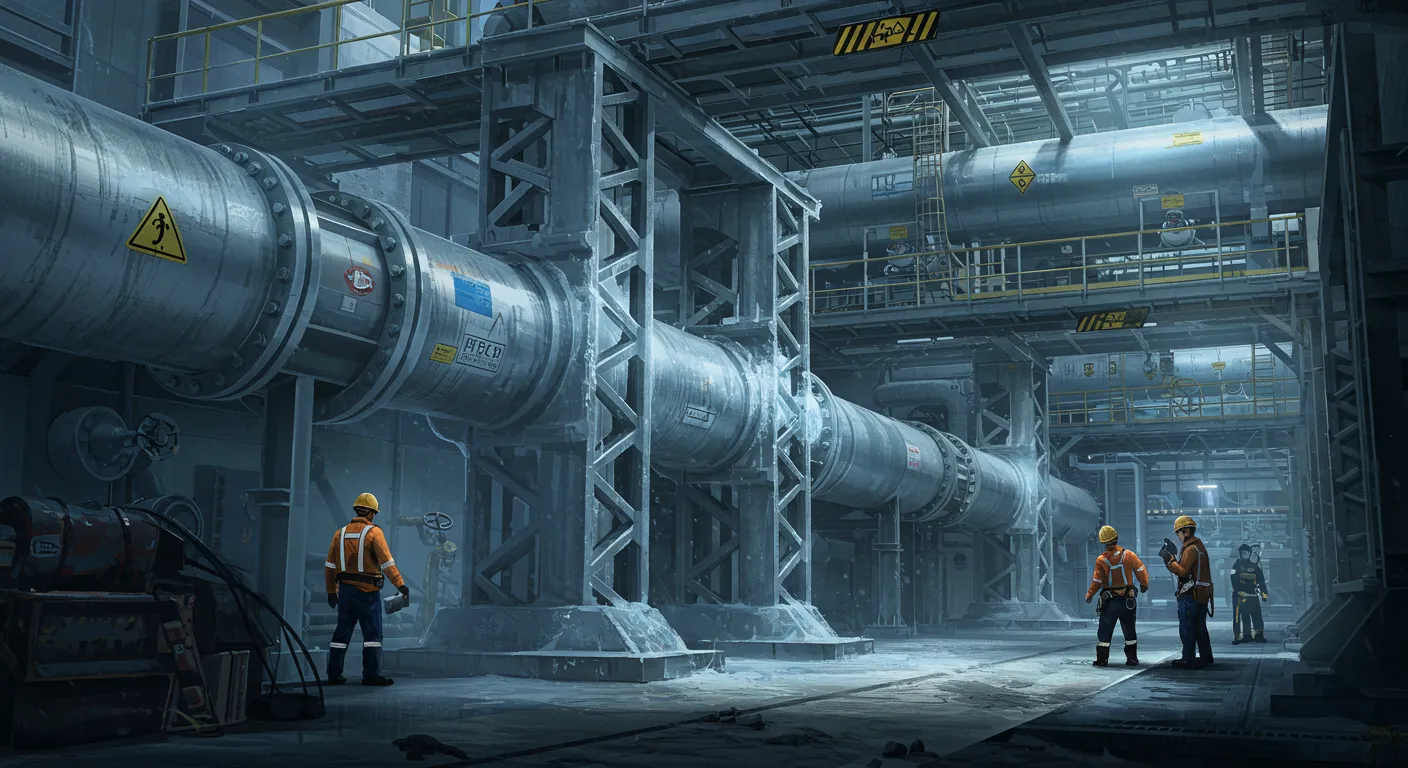
There are stories that stick with you, especially when your heart pounds and you can smell ammonia-scented adrenaline on the back of your tongue. Let me take you back to a moonlit night in the mid-Atlantic, tools stowed and paperwork finished—until that deep, resonant clang from the cargo deck. Within seconds, I was racing through freezing fog, praying I wouldn’t—you know—go down in one of those ‘infamous incidents at sea’ case studies. But what happened that night wasn’t just a close brush with disaster; it was a lesson in how every tiny detail in cryogenic pipe support adjustment can draw the line between business as usual and a story no one wants to repeat.
The Night the Deck Went Silent: A Leak on the Edge (My LNG Horror Story)
Every LNG ship maintenance professional has a story that keeps them up at night. Mine began with a metallic clang echoing across the cargo deck at 2:00 AM—a sound that instantly cut through the usual hum of the vessel. On an LNG carrier, where every pipe and support is engineered for -162°C, any unexpected noise is a warning. My mind raced through possibilities: a loose snubber, a spring hanger gone rogue, or—worst of all—a compensator misalignment. In LNG transportation safety, even a minor misadjustment in cryogenic pipe support can quickly escalate into a dangerous situation.
Within seconds, the ship’s Emergency Shut-Down (ESD) protocols were triggered. The deck, usually alive with the subtle sounds of pumps and compressors, fell eerily silent. I grabbed my flashlight and headed for the source, my heart pounding. As I approached, a telltale frost ‘bloom’ had formed around one of the pipe supports—a chilling sign that something was very wrong. On LNG ships, cold spots like these are often the first visible clue of failed insulation or direct pipe exposure, both of which can precede a leak.
Handheld gas detectors were deployed immediately. Amidst the adrenaline, a faint gas alarm chirped—almost lost in the tension of the moment. The leak was subtle, but in LNG ship maintenance, even a small escape of gas at -162°C is a serious threat. At these temperatures, leaks are invisible to the eye, but frost and ice are unmistakable red flags. The Life Safety Alarm (LSA) sounded, confirming the urgency. We had less than four minutes from the first alarm to action.
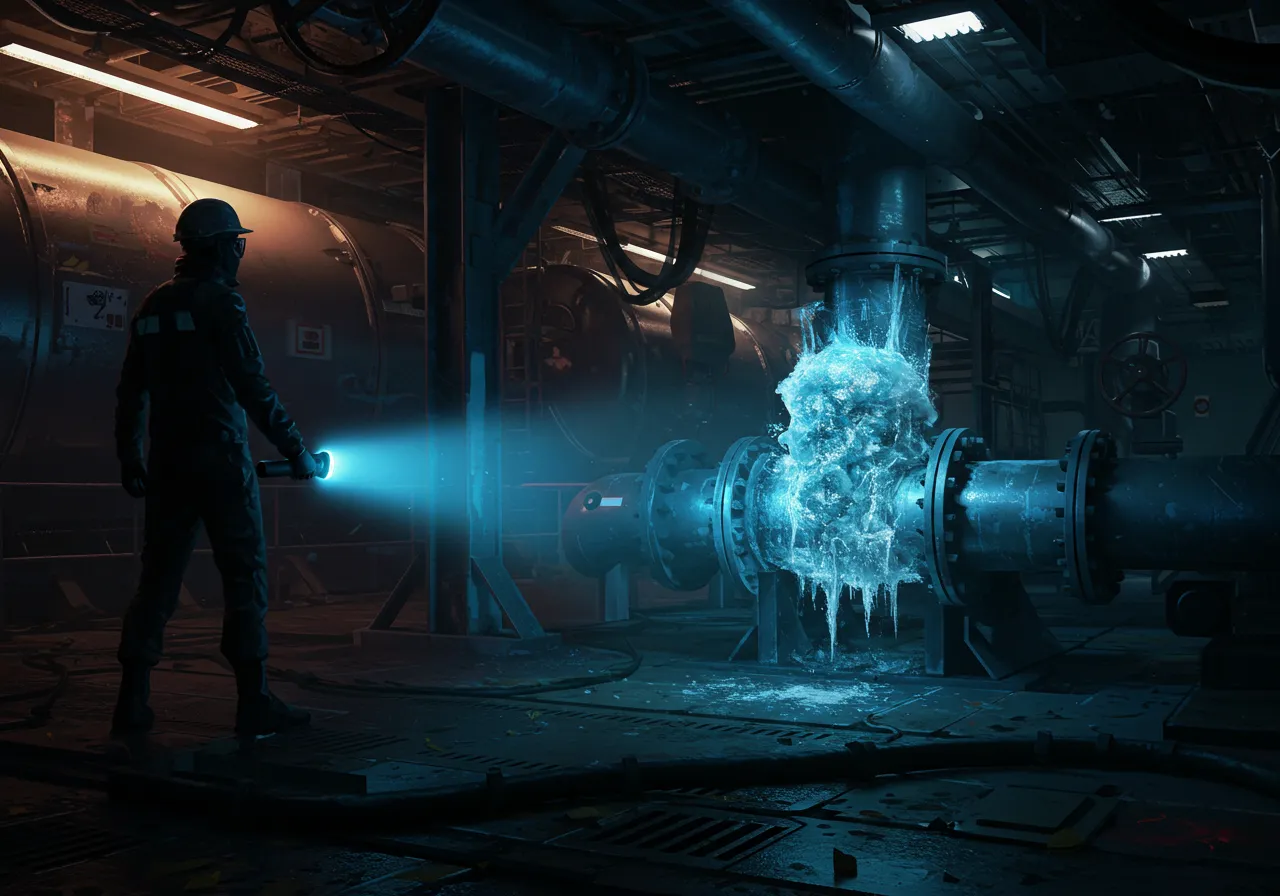
My investigation focused on the support in question. I quickly referenced the support schedule and system tags—tools that are second nature to me after years of LNG transportation safety work. The culprit became clear: the compensator’s preset length had never been reset after hydrotesting. This is a common field slip—presets and travel stops are sometimes forgotten in the rush to complete pressure tests. But on an LNG carrier, forgetting this step can compromise the entire system. The misadjusted compensator had allowed excessive movement, stressing the insulation and creating a path for cold gas to escape.
In that moment, I was reminded of Chief Engineer Alexei Morozov’s words:
“In marine engineering, the hardest lessons leave a mark—literally and figuratively.”
This incident was a stark lesson in the importance of precise cryogenic pipe support adjustment. The risks of ignoring proper procedures are real: misadjustment can lead to gas leaks, cargo containment breaches, and even environmental disasters. My prompt response relied on total familiarity with every tag and support schedule—a discipline that every LNG ship maintenance professional must develop. The experience reinforced that in LNG transportation safety, vigilance and attention to detail are not optional—they are lifesaving.
Support Systems: The Subtle, Unforgiving Foundation
When it comes to cryogenic pipe support adjustment on LNG carriers, the devil is truly in the details. At -162°C, every millimeter and every kilogram matter. The foundation of safe, reliable LNG transport rests on a network of supports—each with a specific role, each demanding strict calibration and maintenance. Miss a step, and the consequences can cascade from minor misalignment to catastrophic failure. As Leif Thomassen, Technical Superintendent, wisely puts it:
Pay precise attention to the support schedule. It’s a roadmap, not a suggestion.
Cryogenic Expansion Joints and Compensators: Each with Its Quirks
Expansion joints and compensators—typically crafted from AISI 304 stainless steel—are the first line of defense against thermal movement. Axial expansion joints absorb lengthwise shifts, lateral designs handle side-to-side movement, and universal joints manage complex, multi-directional changes. Each type has its own preset length and alignment requirements, as detailed in OEM Installation, Operation, and Maintenance (IOM) manuals. Even a few millimeters off—beyond the ±3 mm tolerance—can overload bellows, accelerate fatigue, and void warranties. Calibration of cryo compensators is not a “close enough” job; it’s a precise science.
Spring Hangers: Variable vs. Constant—Rod Length Is Your Best Friend
Spring hangers are the unsung heroes, absorbing vertical movement as pipes contract and expand. Variable spring hangers change their load with pipe position, while constant spring hangers maintain a steady force. Calibration is everything: rod lengths are set using turnbuckles and lock nuts, and load is checked with pointer indicators. If the pointer isn’t in the correct range, or if the travel range doesn’t meet the 90% minimum, the support won’t do its job. Spring hangers calibration is a hands-on process, and rod length is your best friend for getting it right.
Snubbers, Stops, Sliding and Guided Shoes, Anchors: The Supporting Cast
Beyond the main supports, a host of ancillary components play starring roles. Snubbers allow slow thermal movement but lock up during shocks or seismic events. Rigid stops and anchors provide fixed points, while sliding and guided shoes direct movement along safe paths. Each must be installed and adjusted per the support schedule. Miss one, and the risk snowballs—overloading nozzles, crushing insulation, or causing cold embrittlement failures.
Tagging, Tracing, and the Unforgiving Nature of Documentation
Every support is tagged, traced, and scheduled. The support schedule isn’t just paperwork—it’s the backbone of the system. IOM manuals specify tiny tolerances, and breaking them can mean disaster. “Almost right” is actually dangerously wrong in this world. Strict adherence to support specifications is essential to prevent cumulative stress and cold embrittlement failures. Every adjustment, every measurement, every photo is documented, ensuring that nothing is left to chance and that the system’s integrity is preserved for the long haul.
Where Things Go Wrong: The Hidden Perils of Improper Adjustment
In my years working with LNG carriers, I’ve learned that the smallest misstep in cryogenic pipe support adjustment can trigger a chain reaction of problems. The risks of improper support alignment are not just theoretical—they’re real, costly, and sometimes irreversible. As Maria Lundvik, LNG Projects QA/QC Lead, once told me:
The quietest mistakes always haunt you the longest.
Let’s break down where things most often go wrong in the field, and why these issues matter so much for marine engineering LNG safety.
Overstressed Nozzles: One loose or misadjusted hanger can overload the nozzle at a pump, compressor, or tank. This isn’t a minor issue—nozzle overload leads to premature fatigue, cracks, and sometimes catastrophic failure. I’ve seen connections fail years ahead of schedule, with damage that’s often impossible to fully reverse.
Bellows Fatigue in Expansion Joints: Expansion joint bellows are sensitive to misalignment. If supports aren’t set to the right preset length or if there’s torsion, the bellows can develop fatigue cracks. These cracks may start small, but they grow with every thermal cycle, eventually risking leaks or ruptures.
Insulation Mishaps: Overbuilt or poorly applied insulation can block the movement of sliding shoes or guides. This causes “cold spots,” ice formation, and even embrittlement of surrounding structures. I once encountered a case where insulation overbuild blocked a sliding shoe upstream of a cargo pump nozzle. The resulting nozzle stress spiked dangerously until we trimmed the insulation—an avoidable problem, but only if you’re vigilant during commissioning.
Loose Supports and Vibration: If a support is loose, expect vibrations and rattling. This accelerates wear, shortens the lifespan of the support, and can even lead to cargo containment breaches. The system’s reliability drops fast, and safety risks climb just as quickly.
Ignoring Documentation: Skipping OEM or class society instructions is a shortcut to disaster. I’ve seen warranty claims denied and class certification threatened because someone ignored the fine print—like failing to remove travel stops after hydrotesting, or not documenting adjustments. Remember, class rules (DNV, ABS, EJMA, ASME) demand meticulous adjustment and traceable documentation, with changes witnessed and certified by a class surveyor.
Most failures I’ve seen can be traced back to small lapses in alignment or field adjustment procedures. For example, variable spring hangers have a ±10% load acceptance window, but critical supports are even tighter at ±5%. If you miss these tolerances, you’re inviting trouble. Travel stops left in place after testing—a common oversight—can lock the system, negating all your careful stress analysis and adjustment work.
In the end, it’s the details that matter. Overlook a tag, skip a measurement, or misread a spec, and you risk the integrity of the entire LNG piping system. The hidden perils of improper adjustment are always waiting—and they rarely announce themselves until it’s too late.

Best Practices: Building Ritual and Routine into LNG Pipe Support Maintenance
When it comes to best practices LNG maintenance, I’ve learned that success is less about heroics and more about disciplined, repeatable routines. Every step—no matter how mundane—matters. As Hiroshi Nakamura, LNG Newbuild Supervisor, once told me:
The best commissioning is a boring one—unremarkable because it’s flawless.
Religious Use of OEM IOM Manuals—No Shortcuts, Ever
Every adjustment I make starts and ends with the Installation Operation Maintenance manuals (IOMs) from the OEM. These are not suggestions—they are the law. I follow them to the letter, from presetting compensator lengths to the sequence for removing shipping bars. Skipping a step or “going by feel” is an invitation for disaster. The manuals are my anchor for QA/QC LNG operations and a non-negotiable part of LNG carrier maintenance best practices.
Pre-Job Tool Calibration: Don’t Trust Factory Settings
Before I touch a single support, I calibrate my tools—torque wrenches, load cells, laser levels. Factory settings are not enough. I check for myself, ensuring every measurement is accurate. This habit has caught more than one error before it could become a failure.
Anchors and Guides: Confirmed and Torqued per Design
Anchors and guides are the backbone of the support system. I confirm every one is installed and torqued to spec, referencing the support schedule and design drawings. If an anchor is off by even a few millimeters, it can throw off the entire network. Sequential, unhurried commissioning here prevents compounding errors down the line.
Compensator Installation: Shipping Bars and Tie Rods Stay Until Supported
During installation, I always keep shipping bars and tie rods in place until the system is fully supported. This prevents premature loading and protects sensitive bellows. Only when every support is in place and verified do I remove these restraints, following the OEM’s exact sequence.
Spring Hanger Adjustments: Pointer Sight Glasses and Locking
For spring hangers, I use pointer sight glasses to set the correct travel range. Rod lengths are adjusted with turnbuckles, and every adjustment is locked with nuts. I check that travel is within 90% of design and elevation within ±3 mm. If not, I redo it—no exceptions.
Walkdowns, Check-Sheets, and Punch Lists: QA/QC as Survival
After adjustments, I perform a systematic walkdown, using check-sheets and a tag-by-tag punch list. This isn’t just paperwork—it’s survival. Every deficiency is documented and tracked to closure. For class society certification, this level of documentation is mandatory.
Critical Checks After Testing
After hydrotest or pneumatic test, I recheck all spring settings. Test mediums can temporarily increase loads, so I verify that all stops are reset and springs are within tolerance before handover.
Disciplined routines and documentation habits catch errors before they bloom into failures. In LNG pipe support maintenance, ritual is not just tradition—it’s the foundation of safety and reliability.
Diagnosis and Recovery: Troubleshooting (and Surviving) the Next Scare
When it comes to troubleshooting cryogenic pipe support on LNG carriers, the first signs of trouble are often subtle: a faint rattle on deck, insulation damage, or a pointer indicator drifting outside its middle-third range. These symptoms are early warnings that something is off in the stress balance or support alignment. Overlooking them can let small issues snowball into major failures—so my approach is always systematic, blending technical know-how with a healthy dose of intuition.
Spotting the Symptoms: What to Look For
Insulation damage: Crushed or scuffed insulation, ice formation, or cold spots can signal excessive movement or misaligned supports.
Rattling or vibration: Loose supports or excessive friction at sliding shoes (which should stay within 5–10% of vertical load) can accelerate wear and threaten system integrity.
Pointer drift: If the load indicator on a spring hanger is outside the middle third, suspect misadjustment or thermal drift.
Step-by-Step Troubleshooting: From Visuals to Data
Start with a visual inspection. Look for obvious signs—misaligned shoes, insulation breaches, or travel stops left in place.
Move to precise measurements. I use laser leveling for elevation, total stations for 3D positioning, and load cells to check actual hanger loads. For critical or constant spring hangers, a ±5% load variance is the maximum allowed.
Deploy thermal imaging. This is invaluable for finding ‘invisible’ cold leaks or blockage points that visual checks might miss.
Root Cause Analysis: Fix the Source, Not Just the Symptom
Effective troubleshooting cryogenic pipe support means tracing issues upstream. For example, pointer drift might be caused by insulation overbuild blocking a sliding shoe, not just a misadjusted spring. I always ask: what changed, and where did the problem start? Sometimes, stress analysis of cryogenic systems is needed to confirm if thermal movements are within predicted ranges.
Document Everything: QA/QC in LNG Operations
Every intervention, from minor adjustments to major fixes, is logged by tag number, with before-and-after measurements and photos. If a problem can’t be resolved on the spot, I escalate it via a punch list or, for significant nonconformities, a Non-Conformance Report (NCR) that triggers class society involvement. This traceability is non-negotiable for QA/QC LNG operations.
Field Anecdote: When the Unexpected Happens
After a pressure test, I once found a travel stop jammed, leaving the spring load 30% over design. We had to re-balance the spring, triple-check the travel range, and notify the class surveyor. It was a reminder that even with careful planning, surprises happen—and every step must be verified.
Trust your gut, but double-check with your tools. Machines don’t get tired; people do. — Viktor Ivanov, Senior LNG Engineer
In the end, systematic diagnostics—combining experience and measurement—are the backbone of surviving the next scare in LNG cryogenic pipe support.
Regulatory and Safety Realities: The Rules That Save Lives (and Paperwork)
When it comes to regulatory compliance on LNG carriers, the rules aren’t just guidelines—they are the backbone of safety and operational integrity. Every adjustment I make to cryogenic pipe supports is governed by a strict framework of international codes, shipowner requirements, and class society rules. Skipping a single step isn’t just risky; it can lead to catastrophic failures, legal trouble, or even a vessel being grounded indefinitely.

Work Permits, Gas Tests, and ATEX Tools: No Shortcuts Allowed
Before touching a single bolt, I secure the right work permits and ensure all gas tests are current. Gas test results must always stay below the lower explosive limit (LEL)—there’s zero room for error. In hazardous zones, only ATEX-certified tools are allowed. These protocols might seem inconvenient, but they’re non-negotiable. Exclusion zones are strictly enforced; unauthorized entry into an ESD (Emergency Shut-Down) area can mean immediate suspension or worse. Discipline in these areas is not just about following orders—it’s about coming home safe.
Lockout/Tagout and ESD Protocols: One Missed Step, One Major Incident
Lockout/tagout procedures and ESD protocols are the last line of defense against accidental releases or system energization. If even one step is skipped—say, a valve left open or a tag missed—lives and cargo are at risk. I’ve seen firsthand how a moment’s inattention can lead to near-disasters. That’s why every isolation is double-checked, and every ESD zone is treated with the utmost respect.
PPE: The First Layer of Defense Against Cryogenic Hazards
Proper personal protective equipment (PPE) is essential when working with LNG systems. The risks—brittle fracture injuries, frostbite, and oxygen deprivation—are very real. I never approach a cryogenic line without insulated gloves, face shields, and appropriate respiratory protection. These aren’t just recommendations; they’re lifesavers.
QA/QC LNG Operations: Documentation as Proof and Protection
Paperwork and procedural rigor are the backbone of both QA/QC in LNG operations and crew safety. Every adjustment, from spring hanger settings to compensator presets, is logged and cross-referenced to standards like DNV RU SHIP Pt.4 Ch.6, ABS, EJMA, and ASME. Each support tag is linked to photos, load verifications, and as-built records. Any deviation triggers a Non-Conformance Report (NCR), which must be fully closed and documented before moving forward. As James McAllister, Maritime Auditor, puts it:
Paperwork isn’t bureaucracy, it’s protection—against accidents and against lawyers.
Surveyor Oversight and Regulatory Compliance: Every Move Scrutinized
Every tweak to support settings is often witnessed—and sometimes challenged—by a classification society surveyor. Their approval is required for LNG carrier maintenance best practices and to maintain vessel class. Loss of class certification can ground a ship, costing millions and putting the crew’s livelihood at risk. That’s why every step, every measurement, and every piece of documentation matters.
What’s Next: Future-Proofing with Technology and a Dose of Healthy Paranoia
As LNG carriers become more complex and the stakes for safe, reliable operation rise, I see the future of LNG maintenance moving rapidly toward digital technologies and smarter workflows. The traditional hands-on approach remains essential, but new tools are poised to transform how we manage cryogenic pipe supports and system integrity at sea.
Continuous Load Monitoring: Real-Time Eyes on Every Support
One of the most promising advances is continuous load monitoring marine systems. By embedding strain gauges and wireless load cells directly into critical supports, we can now track loads and movements in real time—no more waiting for scheduled inspections or relying solely on manual checks in hazardous zones. These wireless sensors not only boost safety but also speed up diagnostics, allowing for faster responses to emerging issues. In fact, industry estimates suggest that predictive digital maintenance tools could reduce unplanned repairs by 10–20%.
Predictive Maintenance: Let the System Warn You
Machine learning is making its way into advanced LNG maintenance technologies. Instead of reacting to failures, these systems analyze historical and live data to predict when a support or component is drifting out of spec. Imagine receiving an alert before a spring hanger pointer drifts or before insulation wear leads to a cold spot. As Satya Raman, LNG Fleet Innovation Lead, puts it:
The future of LNG maintenance is digital—if you’re still using only a wrench, you’re already behind.
Next-Gen Materials: Built for the Harshest Conditions
Materials science is also stepping up. New sliding surfaces and anti-vibration technologies are being engineered to withstand the unique challenges of marine LNG environments—think salt spray, constant motion, and extreme cold. These innovations promise longer service life and fewer failures, directly supporting safer and more reliable operations.
Unified Digital Platforms: Less Chasing, More Doing
Another game-changer is the rise of digital platforms that unify stress analysis, scheduling, and field documentation. No more chasing scattered spreadsheets or hunting for the latest revision of a support schedule. These platforms streamline communication and ensure everyone—from shipyard teams to surveyors—works from the same, up-to-date data.
Field Standardization: Augmented Reality as Your Guide
To reduce human error, especially during tricky adjustments, augmented reality (AR) guides are on the horizon. Imagine overlaying OEM instructions and live measurements right onto the actual equipment through AR glasses—making complex adjustments more consistent and less prone to mistakes.
Scenario Drills: Practicing for the Unexpected
Finally, I recommend tabletop scenario drills. Recreate a gas leak or support failure on paper and challenge your team to spot the critical misstep. These exercises blend traditional risk awareness with digital innovation, reinforcing the “healthy paranoia” that keeps LNG operations safe.
Ultimately, while digital technologies LNG maintenance are transforming the field, the human factor—vigilance, discipline, and teamwork—remains irreplaceable. Industry collaboration among classification societies, OEMs, and fleet managers will be key to realizing these advances and future-proofing LNG carrier reliability.
Conclusion: What I Learned in the Dark (and How You Can Skip the Scary Part)
Every scare, every leak, and every near-miss I’ve faced during LNG ship maintenance has taught me that the smallest detail can make the biggest difference. Working in the dark—sometimes literally, sometimes in the fog of uncertainty—has shown me that cryogenic pipe support adjustment is not just a technical task, but a responsibility that demands respect for the process, the specs, and the people who depend on our work. In LNG carrier maintenance, there are no shortcuts. The routine, the documentation, and strict adherence to QA/QC LNG operations are what stand between a safe voyage and a costly disaster.
One of the most important lessons I’ve learned is to never ignore my instincts. If something feels off—a pointer out of range, a support rattling, or insulation that looks too thick—I stop and check every tag, every setting. This gut feeling, built from experience, is often the first line of defense against a cascade of failures. It’s easy to get complacent, especially when you’ve done dozens of similar jobs, but the LNG environment punishes complacency. Every time I’ve trusted my instincts and double-checked, I’ve either caught a problem or gained peace of mind knowing the system was right.
Embracing new technology is essential for the future of LNG carrier maintenance best practices. Wireless load cells, real-time diagnostics, and digital documentation platforms are transforming how we approach QA/QC LNG operations. But I’ve also learned to double-check the “old school” way—measuring, inspecting, and documenting by hand. Technology is a tool, not a substitute for vigilance. The best results come from blending innovation with the tried-and-true habits of careful measurement and thorough documentation.
Perhaps the most powerful takeaway is the value of sharing stories—especially the “almost” disasters. As Chief Engineer Alexei Morozov once told me,
It’s the stories we share that make us better than the sum of our manuals.
Every engineer has a tale of a close call, and these stories are not reasons for shame, but for improvement. By talking openly about what nearly went wrong, we help the next person avoid the same mistake. This culture of vigilance and shared experience is what raises the bar for LNG safety, turning individual lessons into collective best practices.
So, what did I learn in the dark? That every scare is a message: respect the details, honor the process, and never stop learning. If you want to skip the scary part, build your routine, document everything, trust your instincts, and listen to the stories of those who’ve been there before. In LNG ship maintenance, our greatest strength is not just technical skill, but the wisdom we share—and the culture of safety we build together.
TL;DR: Nail your cryogenic pipe support adjustments, live by the manual, inspect like your safety depends on it—and remember, even the scariest sea stories can teach you how to prevent the next one. Stay vigilant, stay safe.
Comments
Post a Comment